This article explains how strong access control in survey platforms using role-based permissions, least-privilege principles, separation of duties, and modern authentication, reduces breach risk and supports compliance with standards like ISO 27001, NIST, and GDPR.



Access control is one of the most critical security mechanisms in any survey platform. Even with strong encryption in place, weak or misconfigured access controls remain a leading cause of data breaches and unauthorized data exposure (OWASP Top 10).
For CISOs and IT leaders, access control answers a fundamental security question:
Who can access survey data and what are they allowed to do with it?
This article explains how access control works in survey platforms, which principles reduce risk, and what decision-makers should expect when evaluating vendors.
Access control defines how users are authenticated and authorized to access systems, data, and functionality.
In survey platforms, access control governs:
Strong access control is a core requirement across major security frameworks, including ISO/IEC 27001 and the NIST Cybersecurity Framework.
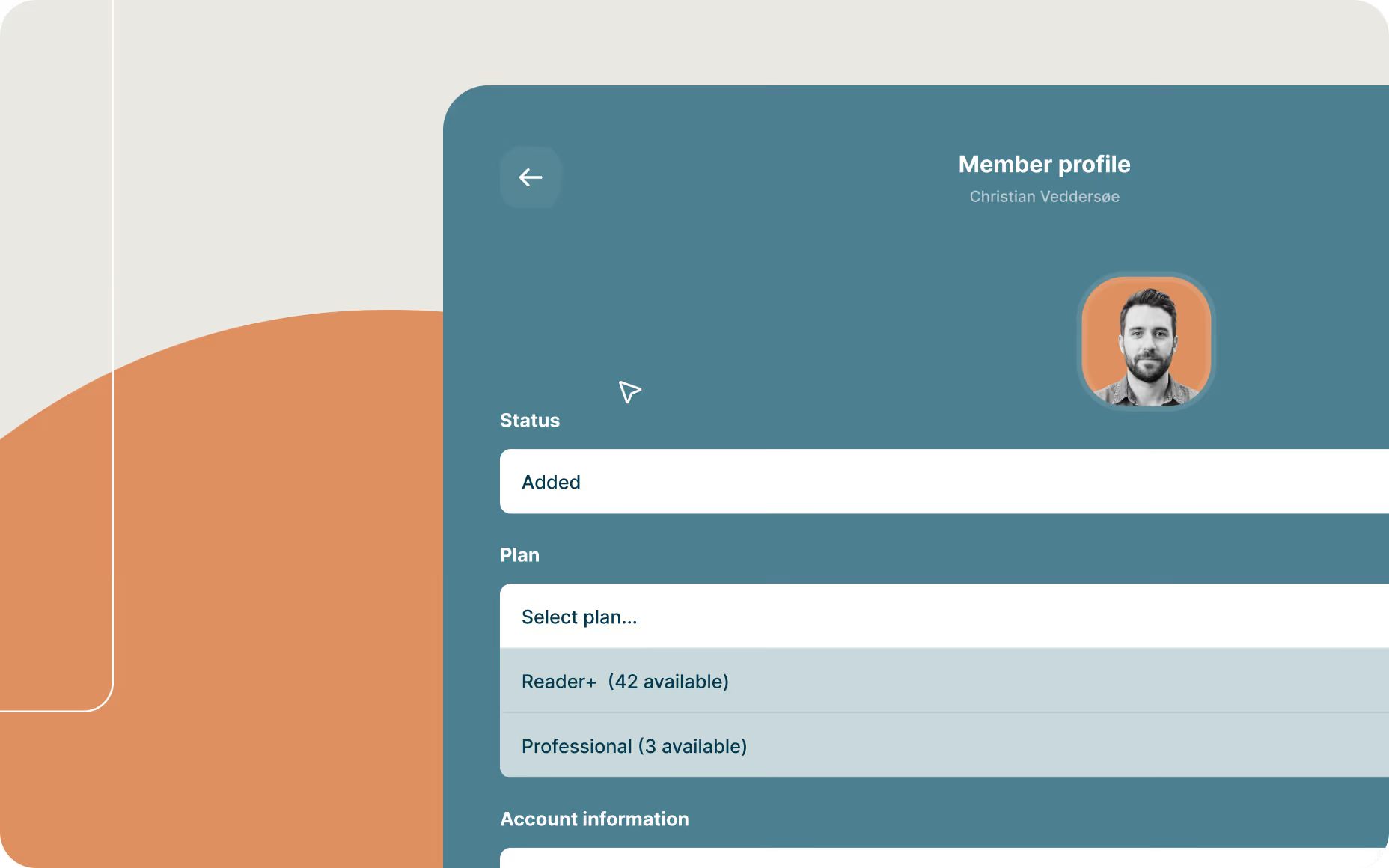
What RBAC means
Role-Based Access Control (RBAC) assigns permissions based on predefined roles rather than individual users. This approach is recommended by both NIST SP 800-53 and ISO/IEC 27001 as a way to enforce consistent and auditable access policies.
Typical roles in a survey platform may include:
Each role defines what actions users are permitted to perform.
Why RBAC matters
RBAC:
According to NIST, role-based authorization is a foundational control for reducing access-related security risk in information systems.
What CISOs should verify
✓ Permissions are role-based and documented
✓ Administrative privileges are limited
✓ Role changes are logged and traceable
✓ Access reviews can be performed regularly
What least privilege means
The principleof least privilege requires that users only receive the minimum access necessary to perform their job. This principle is explicitly referenced in NISTSP 800-53 and ISO/IEC 27001.
In survey platforms, this typically means:
Why least privilege reduces risk
Excessive permissions increase:
Both NIST and ENISA identify excessive access rights as a common contributor to security incidents in cloud-based systems.
What CISOs should verify
✔ Default roles follow least-privilege principles
✔ Elevated access is granted intentionally
✔ Permissions can be reviewed and revoked
Separation of duties
A secure survey platform separates:
Separation of duties is a recognized control in ISO/IEC 27001 and reduces the risk of abuse, error, and unauthorized changes.
Common access control risks
Securit yassessments frequently uncover:
These issues are commonly cited in audit findings and are highlighted in the OWASP Top 10 under “Broken Access Control”.
Authentication vs. authorization
Authentication verifies who a user is, while authorization (access control) defines what they are allowed to do. Both are required to protect sensitive survey data.
Modern survey platforms should support:
MFA significantly reduces the risk of credential-based attacks, which remain one of the most common attack vectors according to industry reports.
Strong access control supports compliance with multiple regulations and standards, including:
Lack of proper access control is frequently cited in regulatory enforcement actions and audit reports.
How Access Control Fits Into Survey Security
Access control works together with other security controls such as:
A survey platform that cannot clearly explain its access control model introduces unnecessary operational and compliance risk.
For more information on GDPR compliant surveys and survey tools and what part Access Control takes within this framevork, please visit The Complete Guide on GDPR compliant Survey Tools.
What is access control in a survey platform?
Access control defines how users are authenticated and authorized to access surveys, data, and administrative functions within a survey platform.
Why is RBAC recommended by security standards?
RBAC is recommended by standards such as ISO/IEC 27001 and NIST because it enforces consistent permissions, reduces human error, and supports auditability.
Is authentication the same as access control?
No. Authentication verifies identity, while access control determines permissions. Both are required to secure survey data.
Does access control help with GDPR compliance?
Yes. GDPR requires organizations to protect personal data from unauthorized access, and access control is a fundamental technical safeguard.
What are common access control failures?
Common failures include excessive admin rights, shared accounts, missing MFA, and lack of permission audits — all highlighted by OWASP as high-risk issues.
We'll match you with the right expert.