
A practical, structured guide to understanding GDPR in a survey context, evaluating providers, and running secure and ethical feedback programs.


Choosing a survey tool is no longer only about features, design, or ease of use. In a world shaped by data breaches, increased regulation, and rising expectations for privacy, organizations must also ensure that their survey platform is fully aligned with the General Data Protection Regulation (GDPR).
Surveys inherently deal with personal data — whether directly through identifiable information or indirectly through metadata and open-text comments. This means that every organization collecting feedback becomes a Data Controller, while the survey platform acts as a Data Processor. Each role carries specific legal responsibilities.
A GDPR-compliant survey tool must therefore provide the necessary technical, organizational, and documentation frameworks for organizations to meet their obligations. This includes secure hosting, transparent data flows, strong access control, rights-management capabilities, and privacy-by-design features.
This article gives you a comprehensive and accessible overview of what GDPR means in a survey context. It outlines what to look for when evaluating survey tools, how to operationalize GDPR in your daily survey work, and how compliance ultimately improves the quality and credibility of your insights. Where relevant, examples are included from modern EU-hosted survey platforms, like Enalyzer, that follow best practices within transparency, security, and data protection.
GDPR has reshaped the way organizations handle personal data across all digital touchpoints, including surveys. Whether you collect employee feedback, customer satisfaction scores, or public-sector evaluations, the reality is that surveys often contain sensitive or identifiable data. Names, emails, timestamps, device information, or open comments can all reveal a respondent’s identity - even unintentionally.
This makes GDPR a central consideration in your survey workflow. It requires organizations not only to comply with the regulation but also to choose tools that support compliance from the ground up. GDPR defines the relationship clearly: the organization conducting a survey is the Data Controller, while the survey tool is the Data Processor. Controllers decide why and how data is processed. Processors provide the infrastructure and must follow strict instructions.
For organizations, this means that compliance cannot be an afterthought. It must be built into your platform choice, your survey design, your governance processes, and the way you communicate with respondents. The right survey tool makes this significantly easier by offering privacy-by-design features, transparent documentation, and secure data handling practices. Many modern EU-based survey vendors are designed with this mindset.

Survey data is complex. It may include structured questions, free-text comments, behavioral metadata, and, in many cases, identifiers used for distributing or personalizing the survey. As a result, GDPR applies even when a survey does not explicitly ask for personal data.
The core principles of GDPR - lawfulness, fairness, transparency, data minimization, storage limitation, integrity, confidentiality, and accountability — must be upheld throughout the entire survey lifecycle. This begins with understanding your role.
Under GDPR, survey work involves clear roles:
Modern survey platforms are designed to support this division of responsibilities by offering clear privacy documentation, access control mechanisms, secure hosting environments, and tools for rights management.
Surveys often collect more data than expected. Some examples include:
This means the survey tool must not only be secure but also provide smart controls that prevent unintended data collection and enable controlled access.
Selecting a GDPR-compliant survey tool is essential, but the requirements are often misunderstood. A compliant tool is not simply “EU-hosted” or “secure.” Instead, compliance requires a combination of architecture, documentation, processes, and privacy-by-design features that enable the controller to uphold their obligations.
Below are the core areas you should expect from any professional survey platform.
The location of your data matters. Many organizations - especially in the public sector, healthcare, or finance - require that data remain inside the EU/EEA. GDPR also requires transparency about all data flows.
A compliant survey tool should provide:
Several EU-based platforms use e.g. European Microsoft Azure regions and publish their data flows openly, helping organizations meet both GDPR and local regulatory requirements.
Security is one of GDPR’s cornerstone principles. A survey tool must protect personal data from unauthorized access, alteration, or loss. This includes robust technical security measures as well as operational discipline.
A compliant survey tool should offer:
EU hosted platforms like Enalyzer implement these safeguards as part of their cloud architecture, combining the security of Azure with their own privacy-by-design approach.
GDPR grants respondents strong rights over their data. Your survey tool must give you the ability to fulfill them effectively and on time.
A compliant tool must allow you to:
Modern survey platforms include respondent-level deletion and export tools that support controllers in handling GDPr requests efficiently.
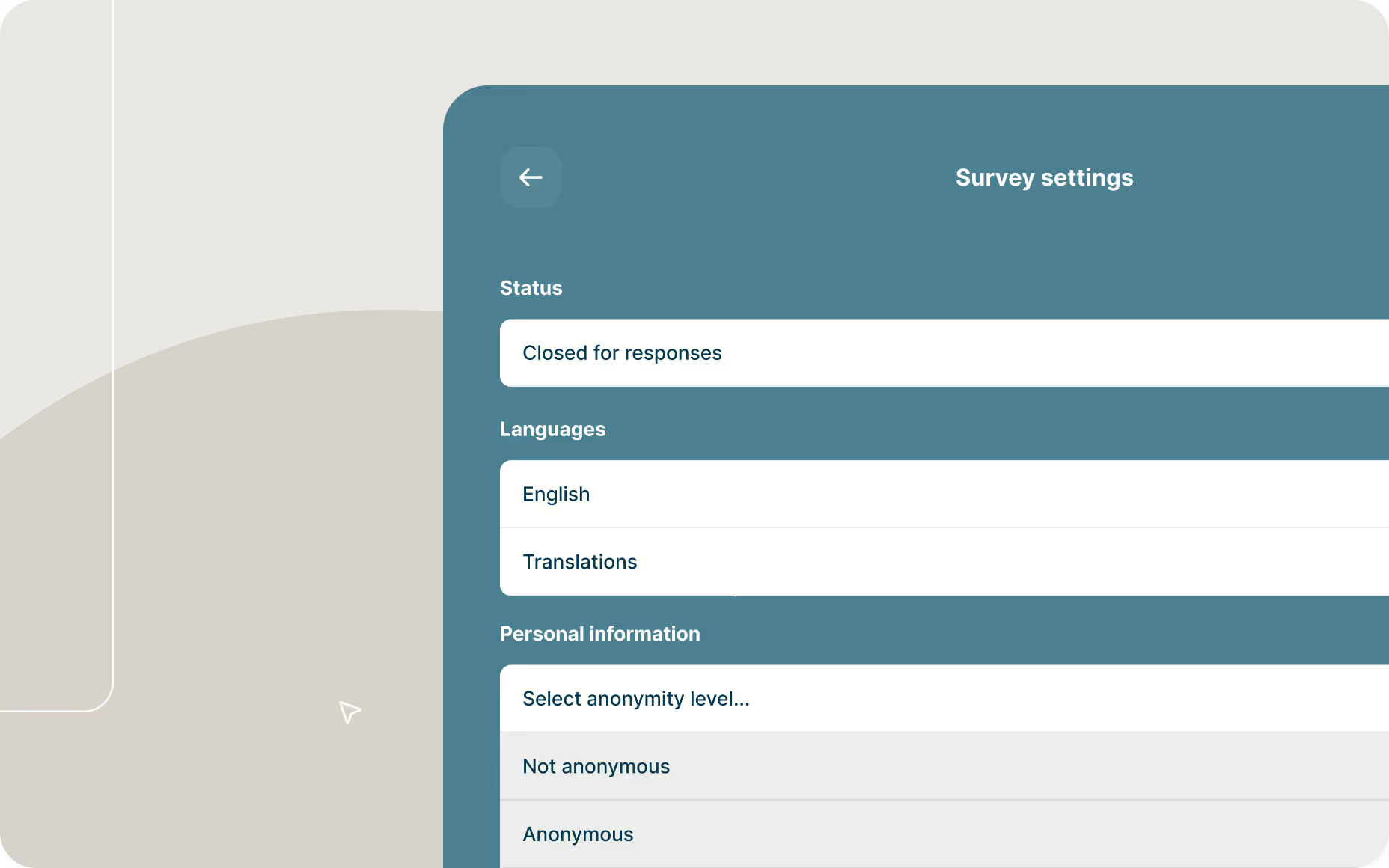
A privacy-aware survey platform should empower creators to protect respondents’ personal data from the start. The following capabilities help ensure surveys meet GDPR principles such as data minimization, purpose limitation, and privacy-by-design:
GDPR requires that processors maintain extensive documentation and share it with controllers. This allows organizations to conduct due diligence and audits when needed.
A compliant survey provider should make available:
Many EU vendors publish these documents through public Trust Centers, making compliance checks significantly easier.
Having the right tool is only one part of the equation. Organizations must also operate their surveys responsibly. GDPR requires transparency, lawful basis, retention rules, access governance, and structured processes for handling data subject requests.
Every survey must have a lawful basis under GDPR. The most common are:
Documenting the legal basis is crucial for compliance.
A good survey tool — combined with thoughtful survey design — minimizes privacy risk.
Best practices include:
Well-designed surveys result in higher trust, better response rates, and safer handling of personal information.
Transparency is a legal requirement and a trust-building mechanism. Respondents should always understand:
Providing this upfront improves clarity and removes uncertainty for respondents.
Not everyone needs full access to personal data. GDPR requires organizations to implement strict access governance.
Recommendations include:
Modern platforms, such as Enalyzer, support granular access roles and identity provider integrations.
Data should not be stored indefinitely. GDPR requires controllers to define and enforce retention periods.
This involves:
Retention governance is one of the most overlooked - but most important - parts of compliance.
When respondents request access, erasure, correction, or restriction of their data, GDPR requires a response within one month.
Your survey tool must support this by enabling:
Platforms like Enalyzer streamline this process through structured export and deletion tools.
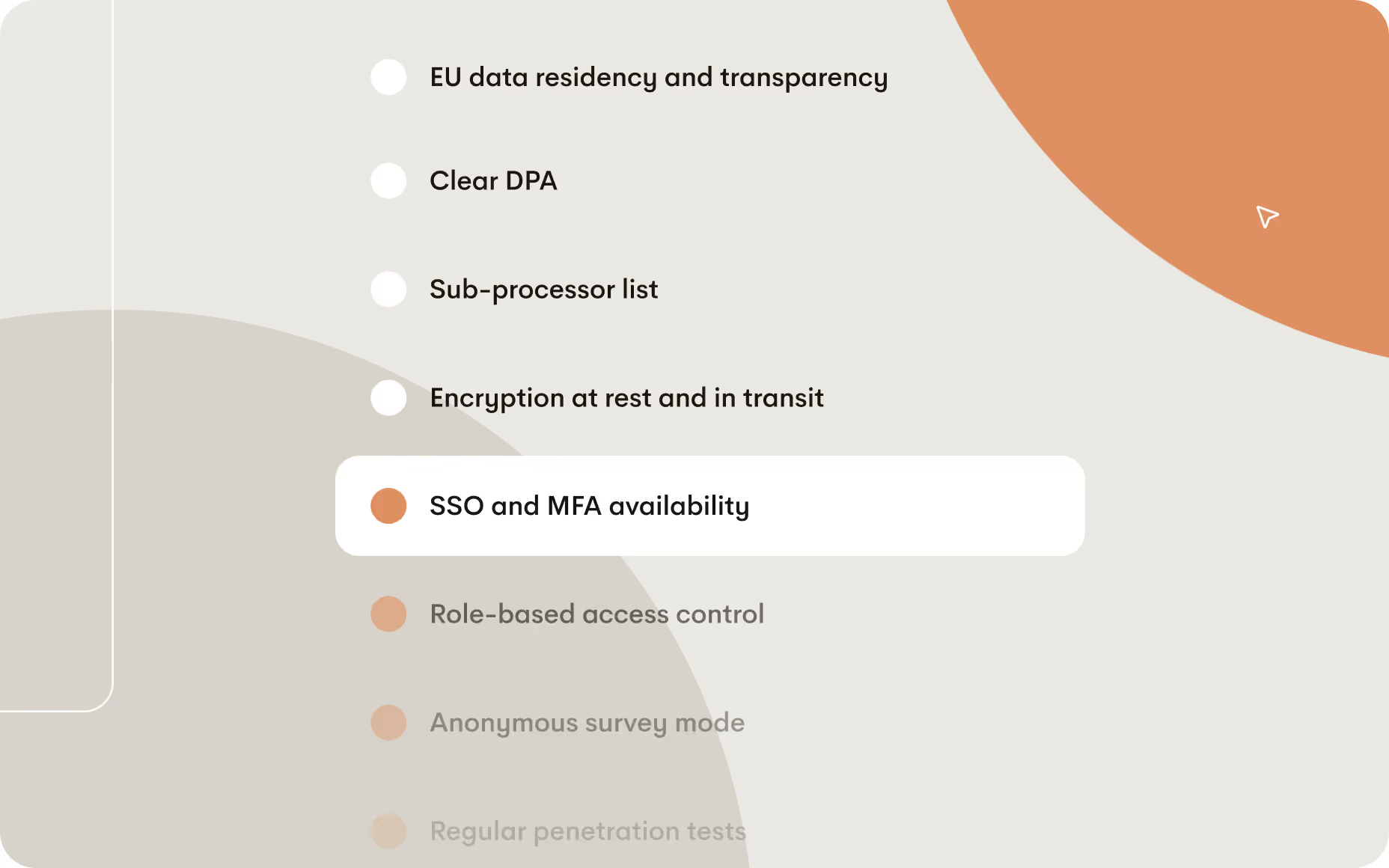
Use this checklist when evaluating your options:
Examples of strong EU based tool vendors that are GDPR compliant in various ways and degrees:
If you want to explore the full evaluation process, from mapping your use cases to assessing platform features, governance models, and vendor fit, read our companion guide, Choosing the Best Survey Tool for Your Organisation.
GDPR is often viewed through a purely legal or technical lens, but in the context of surveys it plays a far broader and more constructive role. Compliance ensures that organizations collect data with intent, clarity, and respect - and these principles ultimately raise the overall quality of the insights you gather.
A GDPR-compliant survey tool supports this by offering transparency, security, and privacy-by-design features that make it easier to operate responsibly. It ensures that respondents understand what happens to their data, encouraging higher participation and more honest answers. It gives teams a structured framework for retention, access, and governance, reducing risk while improving operational efficiency. And it ensures that organizations can document their decisions, respond to data subject requests, and maintain trust across every step of the feedback process.
As the expectations for ethical data handling continue to rise, GDPR compliance is no longer just a regulatory requirement - it is a competitive advantage. Organizations that take privacy seriously build stronger relationships, deliver better experiences, and generate insights that leadership can rely on with confidence. In that way, GDPR becomes not an obstacle, but a foundation for better, smarter, and more trustworthy survey work.
Does GDPR apply to all surveys?
GDPR applies whenever a survey processes personal data, either directly or indirectly. Only surveys that are technically and fully anonymous fall outside the regulation. Most surveys process some form of identifying information and are therefore subject to GDPR.
What are some of the top features a GDPR-compliant survey tool should have?
A compliant survey tool should offer:
Can I track participation without violating GDPR?
Yes — if done transparently. Tracking who has responded (for reminders or follow-ups) is allowed when you inform respondents clearly and have a valid legal basis, such as legitimate interest or contract.
However, tracking must not conflict with anonymous survey settings. If you promise anonymity, no tracking of identifiable participation may occur.
What should I tell respondents to stay compliant with GDPR?
Respondents must receive clear, upfront information before they start the survey. At a minimum, you must communicate:
What happens if respondents share sensitive data in free-text fields?
Sensitive data submitted voluntarily still counts as special category personal data under GDPR.
To stay compliant:
We'll match you with the right expert.