Learn how employee surveys increase engagement, uncover challenges, and help companies improve productivity and results.



Employee engagement is often described as a matter of well-being. In reality, it is largely a performance issue with direct implications for organizational results.
The latest Gallup Q12 meta-analysis, based on more than 700 studies and over 3 million employees, shows clear differences between teams with high and low engagement. Organizations with high employee engagement experience on average:
These figures reflect the difference between teams in the top and bottom quartiles of engagement across organizations and industries.
The point is important. Engagement is not just beneficial for employees—it has tangible organizational and financial consequences.
In my work with employee surveys, I often find that organizations already have substantial data on well-being. The key is not necessarily to measure more, but to understand what drives engagement and where efforts will have the greatest impact.
At Enalyzer, we therefore focus on translating employee data into management insights through our Employee Insight Report. We identify the factors that have the greatest impact on engagement and performance, and prioritize the initiatives that can create real organizational impact. This bring Enalyzer in-front in the market of Employee Engagement Survey Providers.
In this way, employee surveys become more than a well-being barometer for HR—they become a strategic decision-making tool for leadership.
When engagement has such a strong impact on productivity, it is not just about employee motivation. It reflects the actual working conditions employees operate within.
Research shows particularly strong links between effectiveness and factors such as:
When these conditions are in place, both engagement and performance increase. Employee surveys should therefore not only measure well-being as a general feeling, but also the aspects of work that directly influence organizational outcomes.
Even relatively small improvements in engagement can have a noticeable effect on organizational performance. If an organization with 500 employees reduces turnover by just 5 percentage points, this can often result in savings of several million kroner in recruitment, onboarding, and lost productivity.
Research also shows that replacing an employee typically costs between one and two times their annual salary.
Since engagement affects retention, productivity, and absenteeism, employee surveys also become a financial management tool.
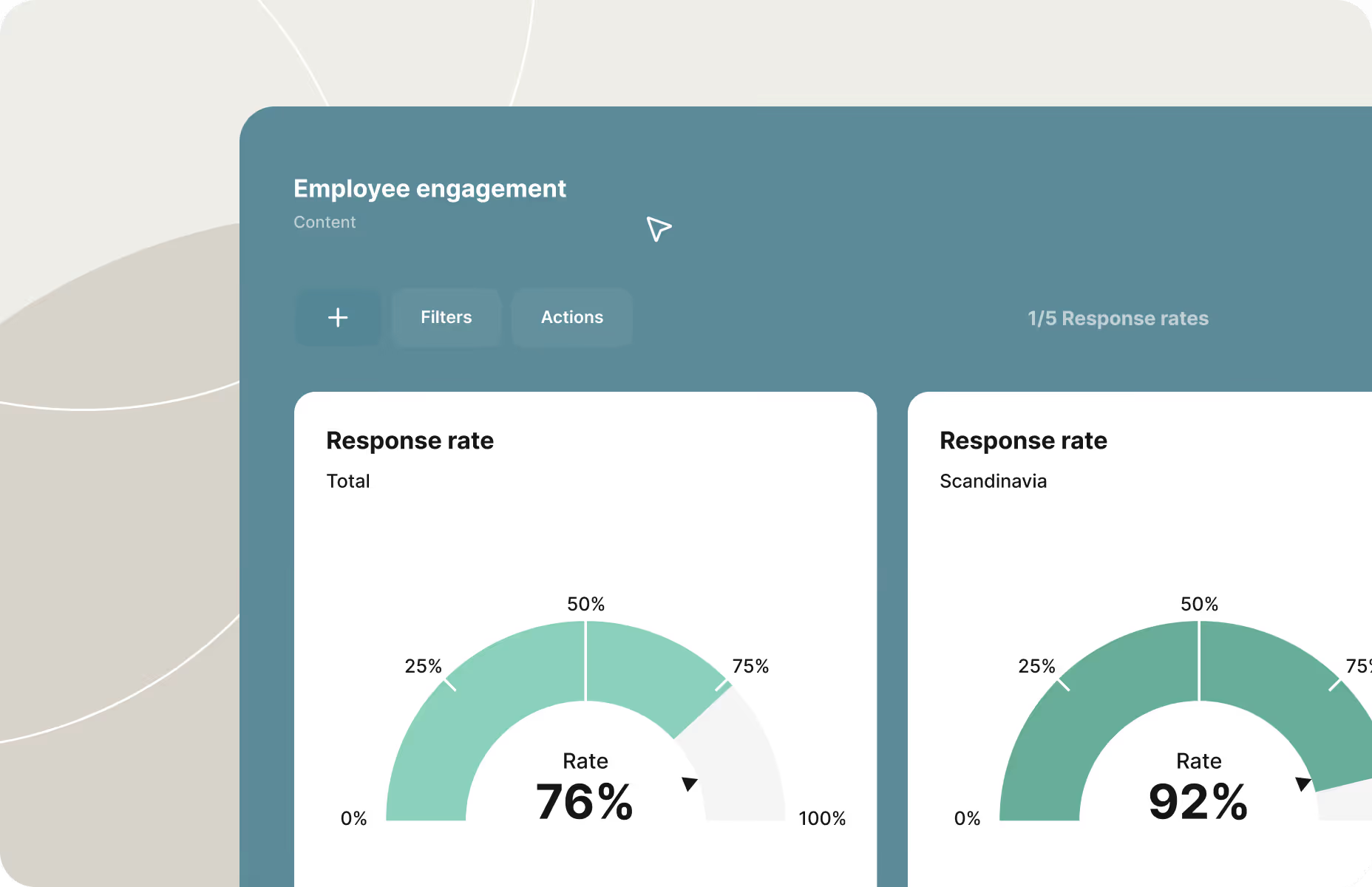
Example of a dashboard from an employee survey visualizing response rates and engagement data for analyzing well-being and productivity within the organization.
Most organizations already measure employee well-being. Many conduct annual employee surveys, and some run pulse surveys several times a year.
Still, many HR departments find that the impact is limited. The issue is rarely a lack of data—it is, in my view, a lack of prioritization and action.
Organizations are often left with reports full of numbers, but without clear answers to:
This gap between data and action is exactly what an evidence-based approach to employee surveys aims to close.
When employee data is analyzed systematically, it becomes possible to identify the factors that most strongly drive engagement and effectiveness. Driver analyses typically show that a small number of factors explain a large share of the variation in well-being and performance.
In many organizations, 2–3 key factors can explain more than half of the variation in engagement. Once these drivers are known, initiatives can be prioritized much more precisely.
This means leadership does not need to focus on ten different improvement areas. Instead, they can concentrate on the few initiatives that actually move organizational performance.
At Enalyzer, we therefore use an Employee Insight Report, where analyses are consolidated into a strategic report that:
The goal is not simply to show how the organization scores, but to answer three key questions:
What do the results mean?
Where should the organization act first?
What will have the greatest impact?
In this way, employee surveys become a tool for strategic insight and action—not just a temperature check.
Final remarks
Effectiveness is not created solely through technology, processes, and strategy. It is largely shaped by employees’ working conditions and engagement.
Research clearly shows that organizations with high engagement achieve:
Employee surveys are therefore not just an HR tool. When used correctly, they are one of the organization’s most important tools for understanding and improving its financial performance.
We'll match you with the right expert.