
Churn is not just an HR issue but a leadership challenge driven by a lack of prioritization and action. This article explains how Enalyzer helps organizations reduce churn through evidence-based measurement, risk analysis, and strategic monitoring systems that turn data into clear decisions and measurable impact.

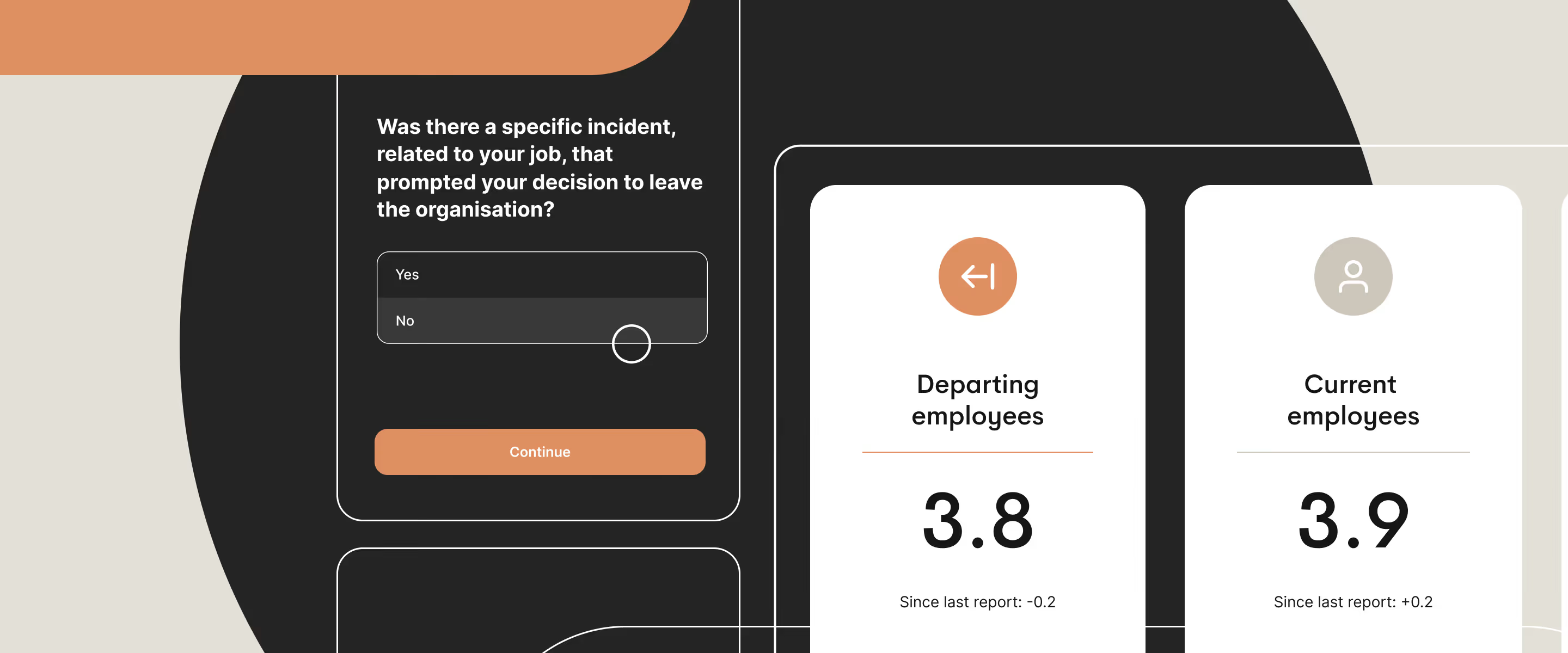

Churn is rarely just an HR problem. It is a leadership problem that lacks visibility and focus.
In my work with HR leaders, I often see the same pattern. The organization measures well-being. Engagement levels look reasonable. Yet churn is slowly increasing.
It is only discovered when key employees resign.
The problem is rarely a lack of data. The problem is that data is not translated into prioritized action.
At Enalyzer, we work systematically to reduce churn through a strategic monitoring system. Not through one-off surveys. Not through gut feeling. But through evidence-based measurement, analytical prioritization, and consistent follow-up.
This is where the difference is created.
Churn rarely happens overnight. It builds over time.
Research shows a clear connection between:
When these factors weaken, the risk of employee turnover increases significantly.
A traditional employee survey can show how employees feel. But it does not necessarily explain what drives churn.
That is why Enalyzer works with driver analyses and regression models to identify which factors actually impact retention within the specific organization.
This means we do not just measure satisfaction. We measure risk.
Many organizations stop at the dashboard. Enalyzer does not.
The core of our approach is Employee Insight, manifested in the Employee Insight Report – HR’s equivalent of the finance department’s annual report.
Here, data is translated into strategic prioritization.
The report:
This changes the conversation at the executive level.
From: “How are we doing?”
To: “Where should we act first to reduce risk?”
This is where churn begins to decline.
A common mistake in churn reduction is focusing on what dominates discussions rather than what has the greatest impact.
If development opportunities statistically have twice the effect on retention compared to internal communication, then efforts should reflect that.
An evidence-based approach to employee measurement means:
This reduces the risk of superficial initiatives and increases the ROI of employee well-being efforts.
An important insight from both research and practice is that churn rarely has a single cause.
Some issues are local. Others are structural.
Enalyzer helps organizations distinguish between:
If a department has an extremely high churn risk, it may be due to local leadership behavior. If employees aged 30–39 generally show increasing turnover intention, the issue is strategic.
This distinction is critical. Otherwise, organizations risk asking managers to solve problems they do not have the mandate to address.
Churn is not reduced through a single measurement. It is reduced through a connected monitoring system.
Enalyzer establishes a measurement architecture where:
The organization’s own development over time is the most important benchmark.
When you can consistently track:
Then churn risk is significantly reduced.
Not because employees are simply made “happier,” but because they experience progress and direction.
Voluntary turnover is expensive.
Recruitment, onboarding, lost productivity, and loss of knowledge often cost between 1–1.5 annual salaries per employee.
When churn risk can be quantified and prioritized, employee well-being becomes a financial discipline.
The Employee Insight Report does not just visualize well-being. It makes financial exposure visible.
This makes it possible to:
Churn is not reduced by intentions. It is reduced by prioritized decisions.
Enalyzer reduces churn because we:
All of this is brought together in Employee Insight Reports that create direction, focus, and real execution power – ultimately leading to stronger organizational results.
We'll match you with the right expert.