How classical work and organizational psychology form a solid foundation for valid, reliable, and actionable employee surveys and well-being measurements.



When organizations want to measure employee wellbeing in a valid, reliable, and actionable way, it is essential to build on established and well-documented research within work and organizational psychology. The most robust approach is not to rely on a single theory, but to combine several complementary research traditions that together cover the key drivers of wellbeing, motivation, engagement, and retention.
Enalyzer’s recommended question framework for employee surveys is based on such a synthesis, drawing particularly on the Job Characteristics Model, Self-Determination Theory, the Job Demands–Resources model (JD-R), and research on engagement, commitment, and leadership. This combination places the model firmly within mainstream, evidence-based research on employee wellbeing.
Questions
Why is this theme included?
Motivation and overall job satisfaction are central and well-documented core indicators in occupational psychology and are widely used as overall measures of employee wellbeing. They provide a holistic picture of how employees experience their work and workplace and serve as strong indicators of engagement, performance, and retention.
In both research and practice, these measures are often used as outcome indicators because they summarize the effects of many underlying working conditions.
According to the Job Characteristics Model, intrinsic motivation and job satisfaction arise when work is experienced as meaningful, provides opportunities for responsibility, and is structured in a way that allows employees to feel they make a difference.
Self-Determination Theory complements this perspective by showing that motivation increases when employees’ fundamental psychological needs for autonomy, competence, and relatedness are supported in their daily work.
Taken together, this theme makes it possible to assess whether the organization’s working conditions create the foundation necessary for sustained motivation and employee wellbeing.
Key references
Hackman, J. R., & Oldham, G. R. (1976). Motivation through the design of work. Organizational Behavior and Human Performance.
Deci, E. L., & Ryan, R. M. (2000). The “what” and “why” of goal pursuits. Psychological Inquiry.
Judge, T. A. et al. (2001). The job satisfaction–job performance relationship. Psychological Bulletin.
Questions
Why is this theme included?
Engagement and loyalty reflect the employee’s emotional attachment to the organization and play a central role in assessing future retention risk.
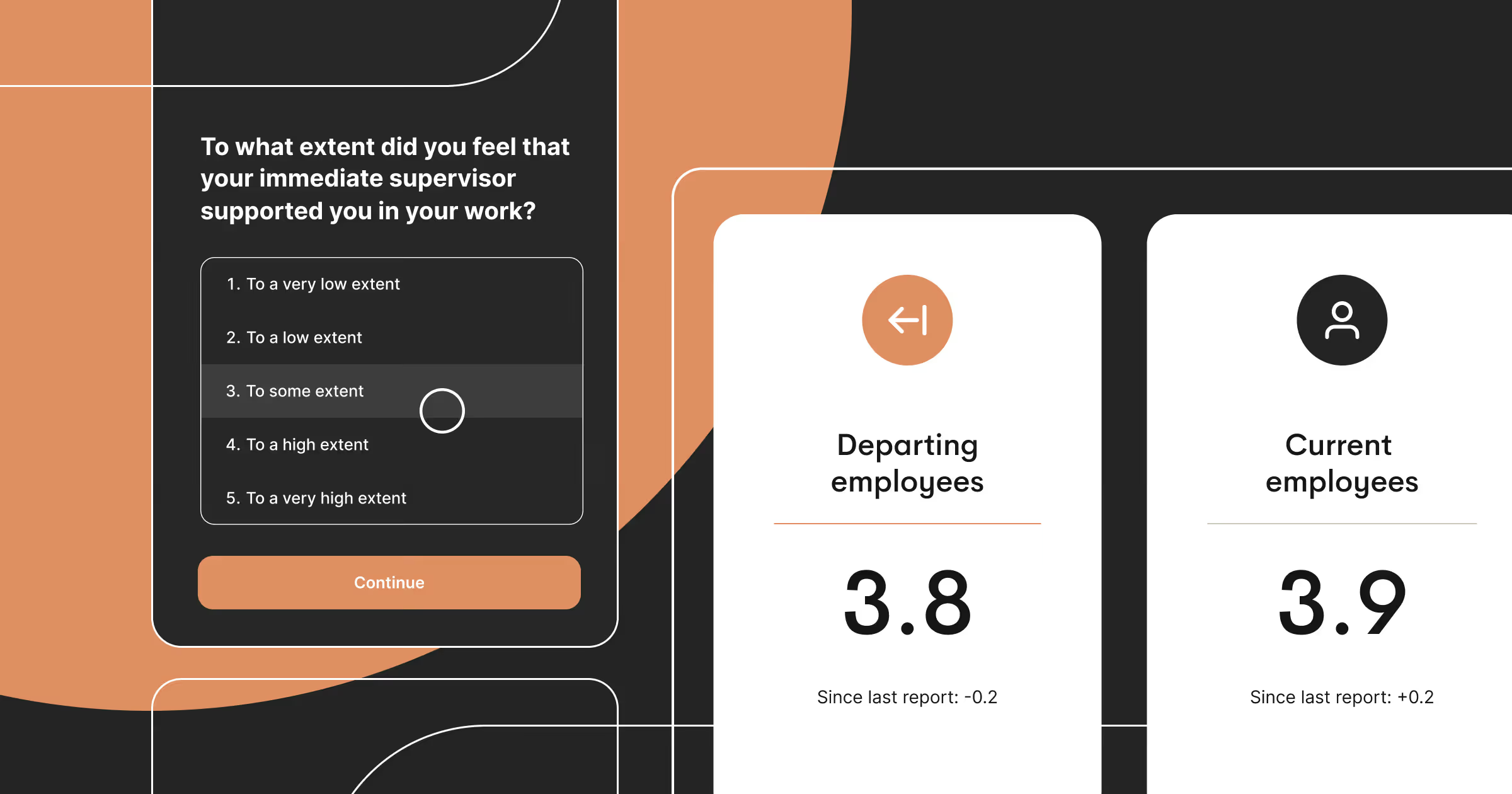
Research shows that highly engaged employees are significantly less likely to consider leaving their jobs, while declining engagement often serves as an early signal of increased turnover risk.
The theme is grounded in research on affective commitment and social exchange theory, where engagement is understood as the result of a reciprocal relationship between employee and organization.
When employees experience support, fairness, and a positive relationship with the workplace, loyalty and intention to stay increase.
This theme therefore provides an important basis for identifying potential retention challenges before they materialize as actual employee turnover.
Key references
Meyer, J. P., & Allen, N. J. (1991). A three-component conceptualization of organizational commitment. Human Resource Management Review.
Kahn, W. A. (1990). Psychological conditions of personal engagement and disengagement. Academy of Management Journal.
Saks, A. M. (2006). Antecedents and consequences of employee engagement. Journal of Managerial Psychology.
Question
Why is this theme included?
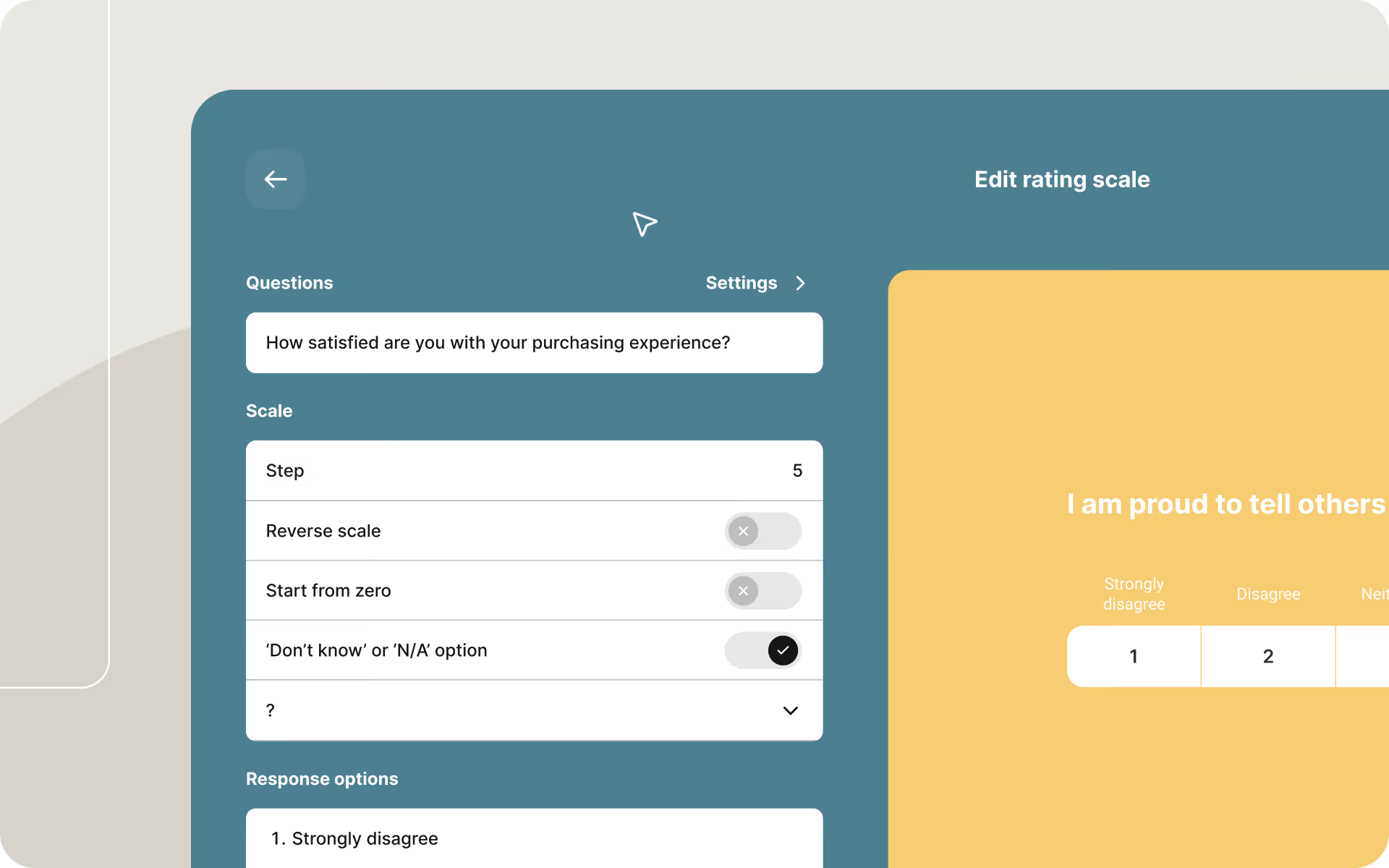
Pride reflects employees’ identification with the organization and its values and serves as an important indicator of emotional attachment to the workplace.
Research shows that strong organizational identification is closely associated with both engagement and loyalty and contributes to a stronger sense of belonging within the organization.
The theme also affects employees’ willingness to stay with the organization and speak positively about their workplace.
Employees who feel proud of their workplace are more likely to act as ambassadors for the organization and less likely to consider other job opportunities.
Pride therefore functions both as an indicator of cultural cohesion and as a signal of the organization’s long-term attractiveness.
Key references
Ashforth, B. E., & Mael, F. (1989). Social identity theory and the organization. Academy of Management Review.
Tyler, T. R., & Blader, S. L. (2003). The group engagement model. Personality and Social Psychology Review.
Questions
Why is this theme included?
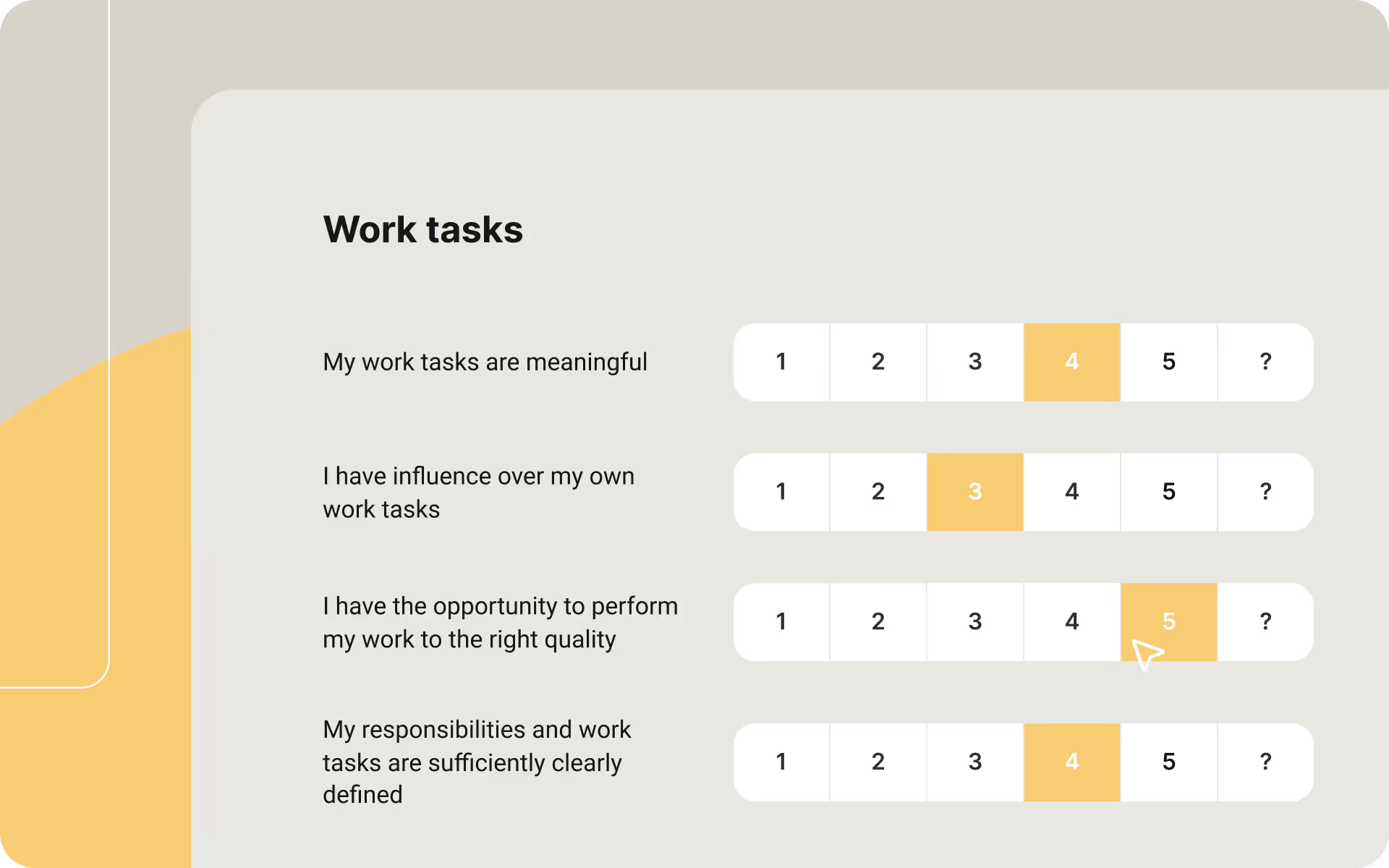
Work tasks form the core of employees’ daily work life and therefore have a major impact on both wellbeing and motivation.
According to the Job Characteristics Model, meaningfulness, autonomy, and clarity of tasks and responsibilities are key drivers of intrinsic motivation and positive work experiences.
When employees understand the purpose of their tasks and have influence over how they are performed, their sense of responsibility and engagement increases.
The ability to deliver work at the desired level of quality is also essential for professional pride and the feeling of doing a good job.
This theme therefore provides insight into whether work is organized in a way that supports motivation, quality, and sustained job satisfaction.
Key references
Hackman, J. R., & Oldham, G. R. (1980). Work redesign. Addison-Wesley.
Humphrey, S. E., Nahrgang, J. D., & Morgeson, F. P. (2007). Integrating motivational, social, and contextual work design. Journal of Applied Psychology.
Questions
Why is this theme included?
Effectiveness here refers to employees’ experience of having the right conditions, resources, and competencies to perform their work in a sustainable and effective way.
This is not about speed, but about whether the organization supports a way of working where tasks can be completed without unnecessary barriers.
According to the Job Demands–Resources model, wellbeing arises when job demands are balanced by sufficient resources such as leadership support, colleague support, relevant training, and clear organizational structures.
This theme therefore provides insight into whether employees experience their working conditions as enabling effective task performance and contributing to both quality and job satisfaction.
Key references
Bakker, A. B., & Demerouti, E. (2007). The Job Demands–Resources model. Journal of Managerial Psychology.
Schaufeli, W. B., & Taris, T. W. (2014). A critical review of the JD-R model. Work & Stress.
Questions
Why is this theme included?
Opportunities for professional and personal development are a central driver of employee wellbeing and engagement.
When employees experience that they can develop their competencies and improve in their work, both motivation and sense of purpose increase.
According to Self-Determination Theory, the experience of competence is a fundamental psychological need that plays a major role in sustaining motivation.
This theme provides insight into whether the organization supports employees’ development in their current roles and offers long-term career perspectives that make it attractive to stay and grow within the organization.
Key references
Deci, E. L., & Ryan, R. M. (2000). The “what” and “why” of goal pursuits. Psychological Inquiry.
De Vos, A., & Meganck, A. (2009). What HR managers do versus what employees value. Personnel Review.
Questions
Why is this theme included?
The balance between job demands and available resources is crucial for sustainable wellbeing over time.
When demands are perceived as reasonable relative to the time, energy, and support available, both job satisfaction and daily energy increase.
Research within the Job Demands–Resources model and stress research shows that sustained imbalance between demands and resources can lead to strain, exhaustion, and negative consequences for both wellbeing and health.
This theme therefore provides important insight into whether employees perceive their working conditions as realistic and sustainable.
Key references
Bakker, A. B., Demerouti, E., & Sanz-Vergel, A. I. (2014). Burnout and work engagement. Annual Review of Organizational Psychology.
Greenhaus, J. H., & Allen, T. D. (2011). Work–family balance. Journal of Management.
Questions
Why is this theme included?
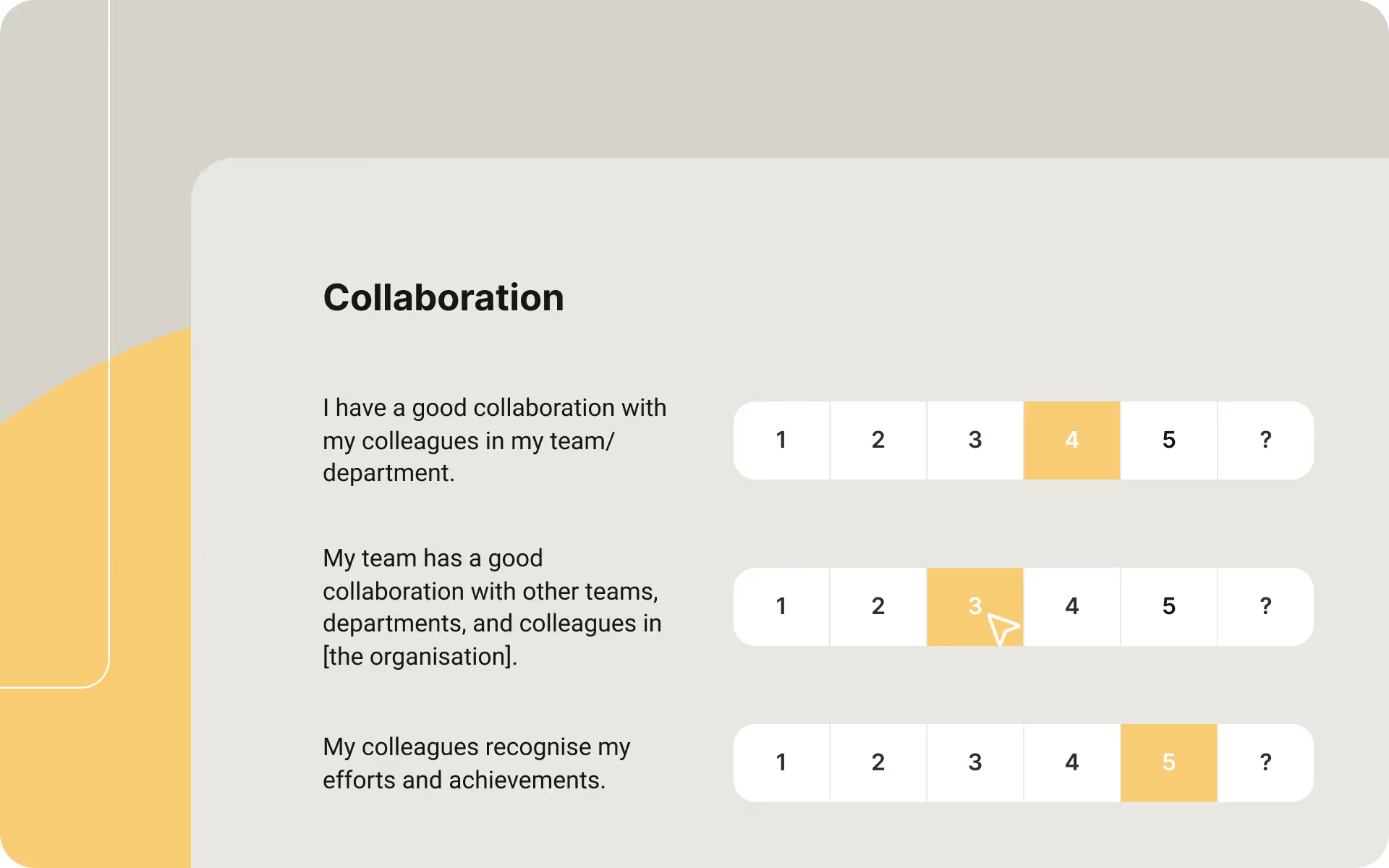
Relationships and collaboration play a central role in employee wellbeing and the experience of job satisfaction.
A positive collaboration climate and strong relationships with colleagues contribute to a work environment characterized by trust, support, and shared responsibility for results.
According to Self-Determination Theory, the experience of belonging is a fundamental psychological need that strongly influences motivation and engagement.
Research also shows that recognition and social support increase employees’ involvement in their work and their sense of being a valued part of the organization.
This theme therefore provides insight into the social work environment and the quality of collaboration within the organization.
Key references
Deci, E. L., & Ryan, R. M. (2000). Psychological Inquiry.
Chiaburu, D. S., & Harrison, D. A. (2008). Do peers make the place? Journal of Applied Psychology.
Questions
Why is this theme included?
Leadership is one of the most influential single factors affecting employee wellbeing and job satisfaction.
The daily relationship with the immediate manager strongly shapes employees’ experience of support, direction, and fairness at work.
Research on Leader–Member Exchange (LMX) shows that the quality of the relationship between leader and employee has a major influence on motivation and engagement.
This theme therefore provides insight into whether leadership supports employees both professionally and personally and whether the relationship contributes to a work environment characterized by trust and clarity.
Key references
Graen, G. B., & Uhl-Bien, M. (1995). Relationship-based approach to leadership. Leadership Quarterly.
Skakon, J. et al. (2010). The impact of leadership on employee well-being. Work & Stress.
Questions
Why are they included?
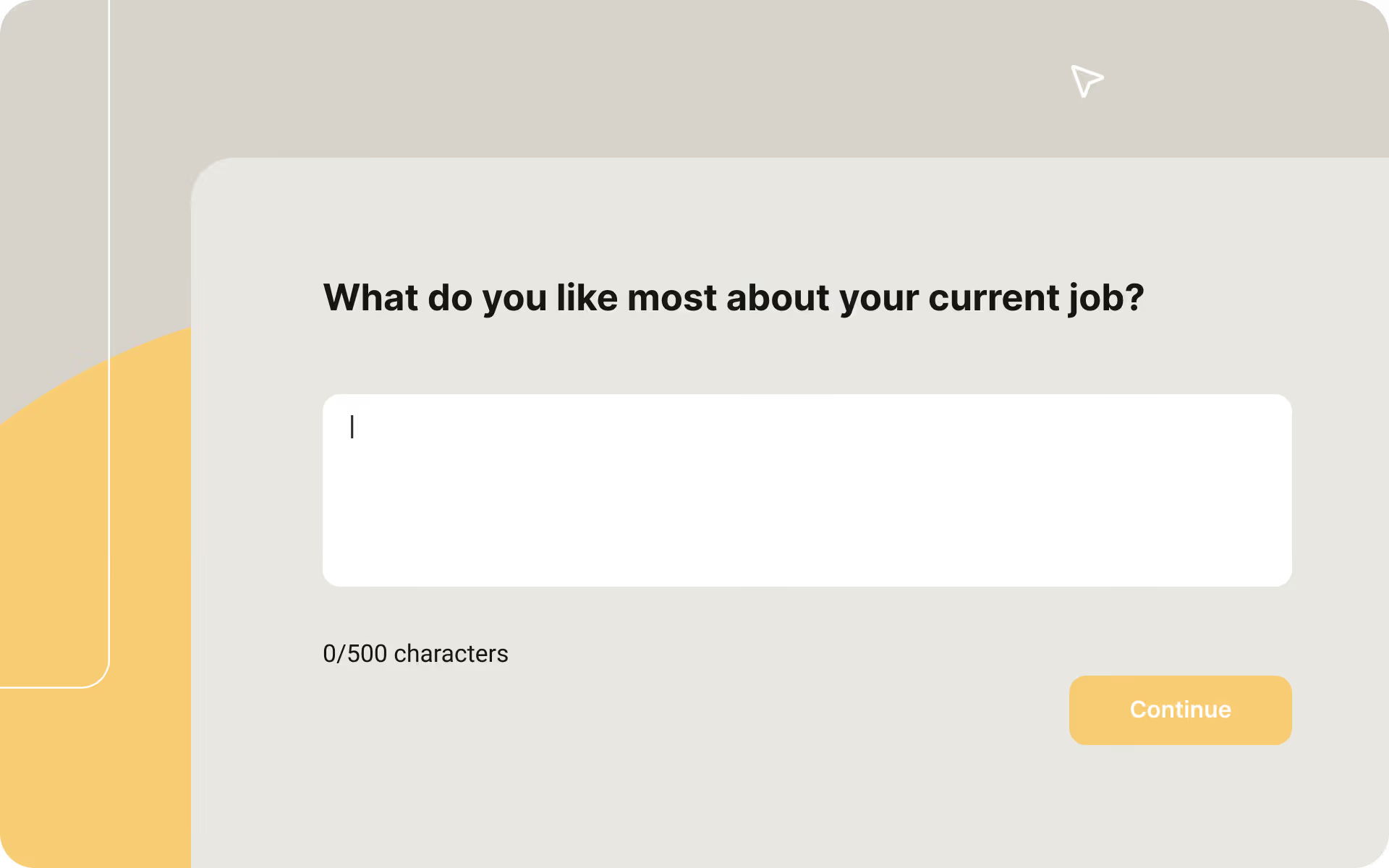
Open questions allow employees to elaborate on and nuance their experiences.
They are inspired by qualitative organizational psychology and action research and serve as an important complement to quantitative measurements.
Key references
Reason, P., & Bradbury, H. (2001). Handbook of Action Research.
Patton, M. Q. (2015). Qualitative Research & Evaluation Methods.
The model can easily be expanded with organization-specific questions that reflect culture, strategy, and leadership values.
At the same time, the model has been evaluated in a large survey among approximately 5,000 representative Danish employees, supporting its relevance and robustness.
Recent research on employee wellbeing has broadened its focus from classical working conditions to also include new psychological, organizational, and technological dynamics.
Key emerging themes include:
Organizational climate
Employees’ shared perception of openness, fairness, and psychological safety has proven to be an important mediator between working conditions and engagement.
Job crafting
Employees’ ability to actively shape and adapt their work is associated with higher motivation and wellbeing.
Mental health and stress prevention
New research highlights mental wellbeing as an independent early indicator of both engagement and performance.
Flexibility and new ways of working
Hybrid work, flexible schedules, and individualized work patterns increasingly influence work-life balance and retention.
Technology and AI
Digitalization and AI affect wellbeing both positively (efficiency, support) and negatively (job insecurity, lack of transparency), depending on implementation.
Perceived job security
Stability and future security have become important drivers of engagement, particularly during organizational change.
Although the themes above are important, they are intentionally not included in the core model.
The core model is designed as a short, focused, evidence-based framework of approximately 20 questions, covering the most robust and universal drivers of employee wellbeing across industries and organizational contexts.
Survey design research shows that:
By prioritizing the most essential questions, organizations also free up more time and energy for dialogue, leadership action, and local follow-up instead of extensive report reading.
The additional themes are not excluded because they are less important, but because wellbeing always unfolds within a specific organizational context.
Research and practice show that organizations differ greatly in strategy, culture, structure, and maturity, meaning a standardized questionnaire rarely captures every relevant dynamic.
A tailored questionnaire allows organizations to supplement the shared core model with targeted questions reflecting:
This approach combines a strong and stable foundation, ensuring comparability and evidence, with the flexibility needed to understand each organization’s unique dynamics.
The result is a more precise basis for decision-making and stronger conditions for targeted follow-up and real improvement.
Henrik Nielsen is Head of Research at Enalyzer and an external lecturer at Copenhagen Business School.
He works with the development of advanced questionnaires, methodological design, and the implementation of analytical projects across industries.
Henrik has extensive experience in survey methodology, data modeling, and the operationalization of measurements in large organizations. He advises both Danish and international companies on building valid measurement frameworks, ensuring methodological consistency, and translating complex datasets into decision-relevant insights.
We'll match you with the right expert.