Many organizations collect high-quality employee wellbeing data but struggle to turn insights into action. This article explores how AI-generated recommendations help bridge the gap between data and real change by identifying the most important drivers of engagement and translating survey results into clear, prioritized actions at the team level.


Many organizations today have become very good at measuring employee wellbeing and engagement. They conduct employee surveys, pulse surveys, and wellbeing measurements with high methodological quality.
Yet many organizations experience that the results rarely lead to visible changes in everyday work.
The problem is rarely a lack of data. The problem is a lack of recommendations and concrete initiatives.
Leaders receive reports, dashboards, and averages but are often left with the same question:
What does this actually mean for us, and what should we do differently?
When the answer is unclear, nothing typically happens. This is exactly where artificial intelligence and AI-generated recommendations can make a decisive difference.
Research on data-driven decision-making shows that data only creates movement when the relevance is clear, when recommendations are concrete, and when uncertainty about “what works” is reduced.
In practice, many wellbeing surveys fail because:
The data becomes interesting but not actionable.
As the Harvard Business Review article “What Data-Driven Decision Making Actually Means” points out, data without a clear direction rarely leads to better decisions or lasting change.
Artificial intelligence does not change what organizations measure, but it changes how results are used.
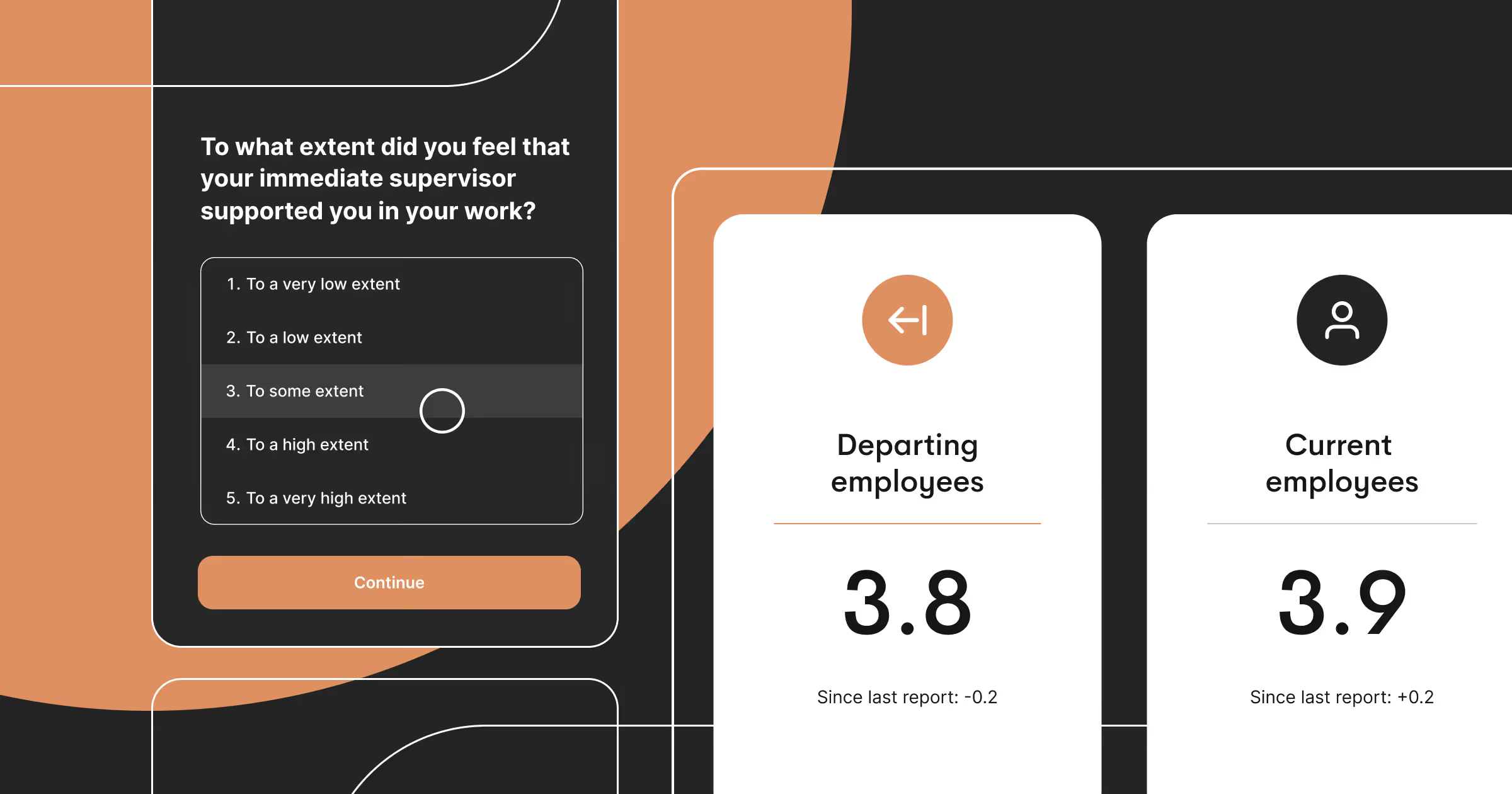
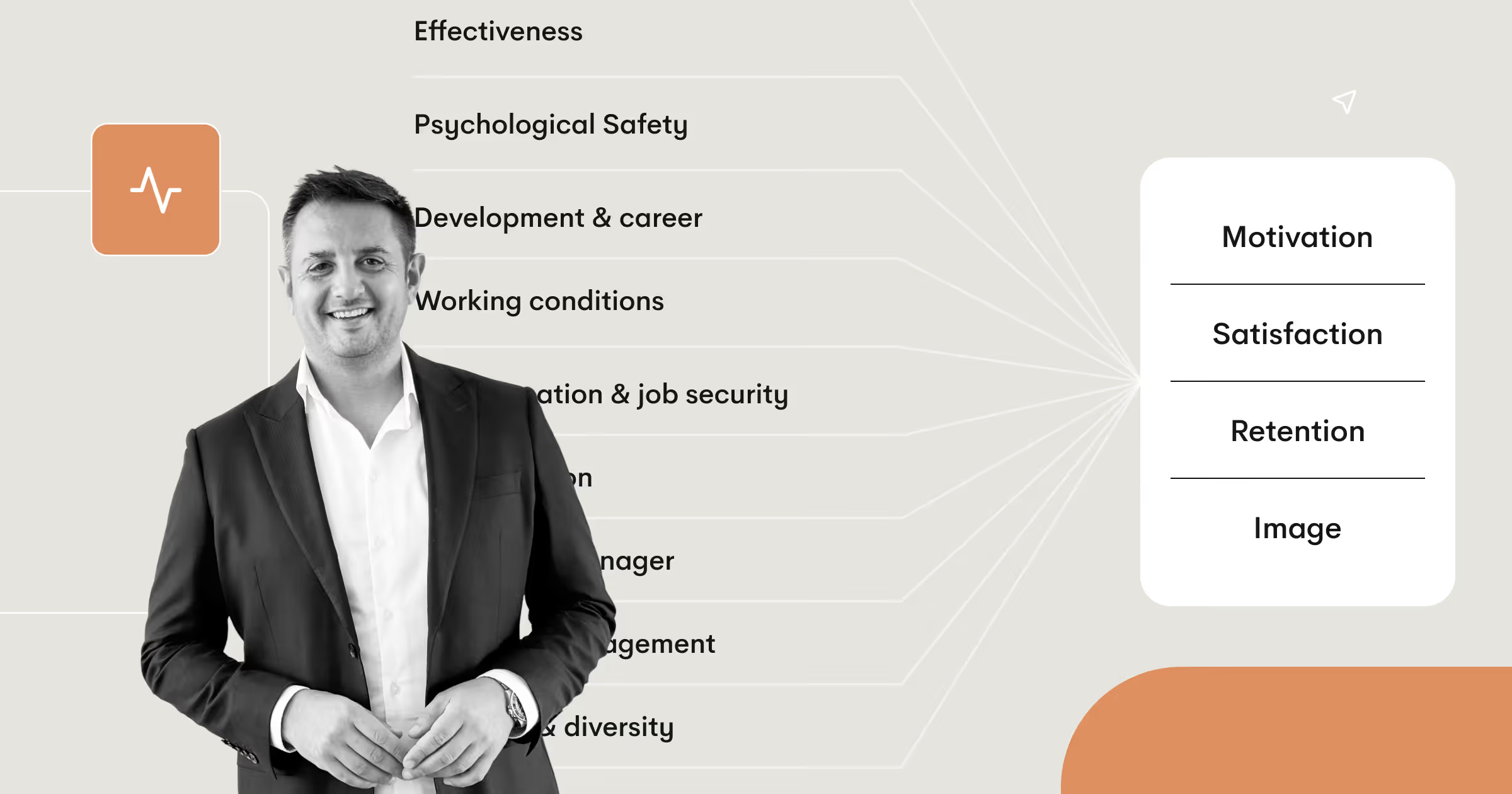
Instead of leaving the interpretation to individual leaders or long group discussions, AI can analyze patterns and relationships in the data, identify the most important drivers in each team, and translate results into clear, prioritized recommendations.
In this way, AI acts as a bridge between complex analysis and practical action. It reduces the need for leaders to “figure it out themselves” and makes it easier to take the next step.
This is something we have worked extensively with over the past year at Enalyzer.
Henrik Nielsen, Head of Research, explains:
"I believe we have come a long way with AI in relation to reporting and follow-up tools."
One of the greatest strengths of AI-based recommendations is that they are context-sensitive.
Enalyzer works with AI-generated recommendations that are based on:
This means that two teams within the same organization may receive different recommendations — not because the ambitions differ, but because the challenges are different.
The focus shifts from general wellbeing advice to targeted actions that make sense in the team’s everyday work.
A traditional report might show that a team scores low on engagement.
An AI-based recommendation can go further by identifying that engagement in this particular team is closely linked to role clarity and prioritization. Employees may experience unclear expectations and shifting priorities.
Based on this, the recommendation might suggest:
The difference is significant.
One approach describes the problem. The other identifies where to act.
Research in organizational development shows that too many simultaneous initiatives significantly reduce effectiveness.
Focus is a prerequisite for change.
AI-generated recommendations support this by helping organizations choose a small number of focus areas with documented impact, while avoiding initiatives that the data does not support.
This creates clarity and momentum and reduces the risk that progress stalls.
Artificial intelligence does not tell organizations how to work with wellbeing.
Instead, it helps show:
This reduces uncertainty while preserving the freedom to act.
In consulting-based solutions, AI recommendations are also combined with dialogue, experience, and organizational context so they can be translated into realistic initiatives.
In this context, Enalyzer works together with several HR consulting and management consulting firms to ensure recommendations are translated into concrete actions and follow-up processes.
A Nordic organization with several hundred employees used employee surveys as a regular practice but experienced limited impact from follow-up actions.
Results were reviewed, but discussions remained high-level and initiatives became numerous and unclear.
By supplementing the survey with AI-generated recommendations at the team level, the situation changed.
Each team received:
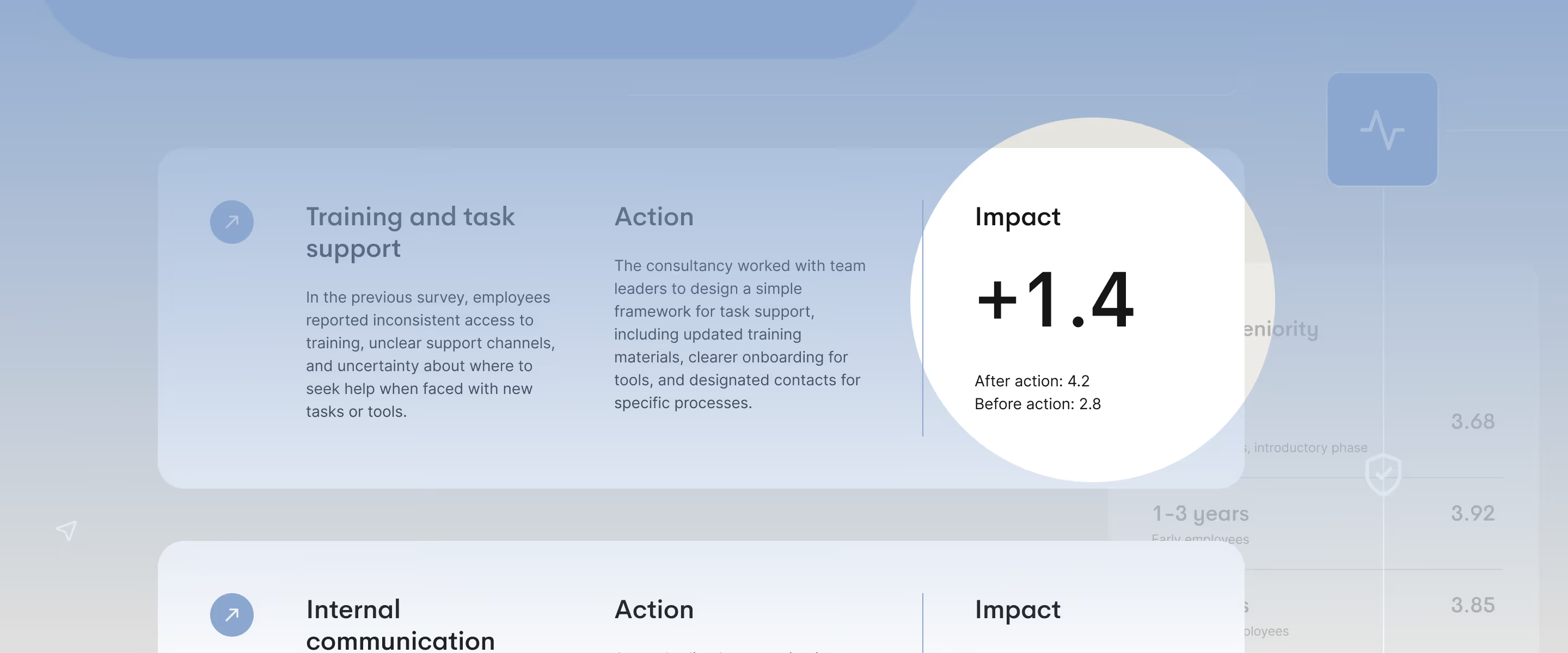
Instead of broad wellbeing initiatives, teams began working with concrete improvements such as:
Subsequent pulse surveys showed improvements in both engagement and perceived workload, as well as a significantly stronger sense that surveys actually led to real change.
Organizations rarely lack data on employee wellbeing. What they lack are recommendations and concrete initiatives.
When data is translated into clear, prioritized recommendations closely connected to the team’s daily work, employee surveys become more than measurements.
They become a tool for creating real change.
That is the difference between knowing something about wellbeing and actually doing something about it.
A solid foundation for the survey itself is, of course, a prerequisite. I have previously written an article about an evidence-based approach to measuring employee wellbeing, which I recommend exploring as well.
We'll match you with the right expert.