A clear argument for why modern organizations must move beyond annual engagement surveys and adopt continuous monitoring to understand their employee experience, strengthen HR’s influence, and improve performance.

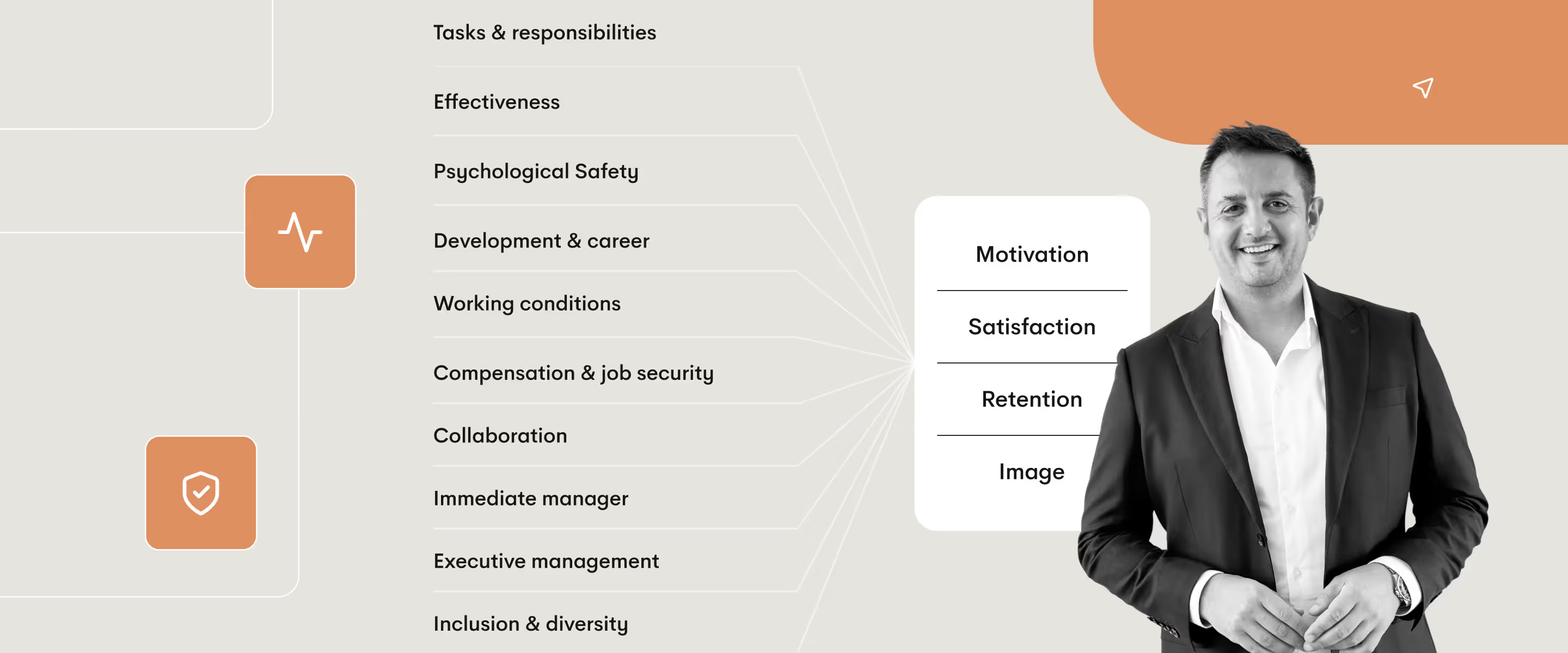

Most organizations measure their employee experience, but very few monitor it.
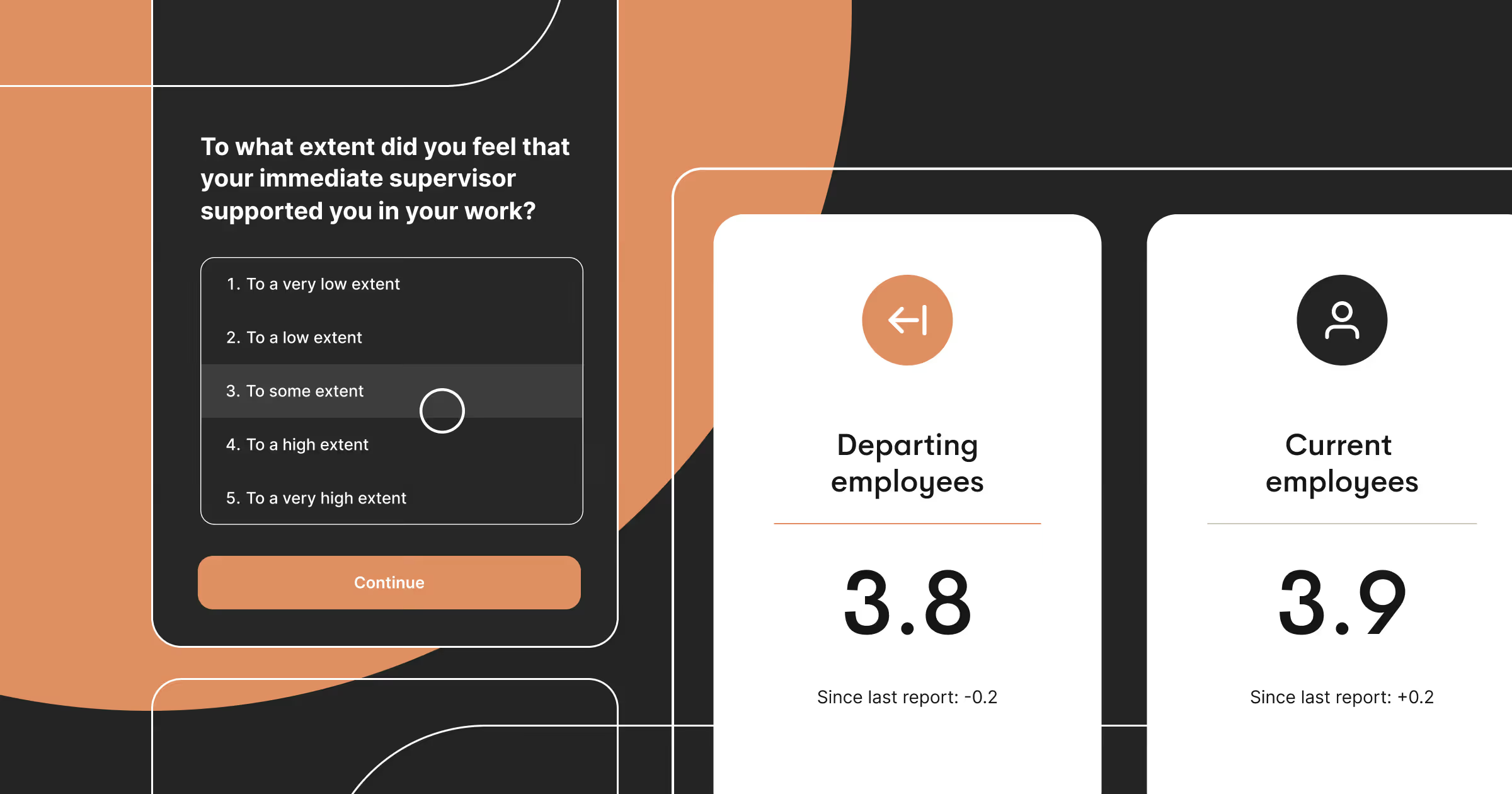
The distinction matters. A survey captures a single moment; a monitoring system creates a continuous picture of how the employee experience evolves. When done well, it reveals trends, early risks, and the impact of leadership and organizational decisions long before they show up in burnout, turnover, or productivity.
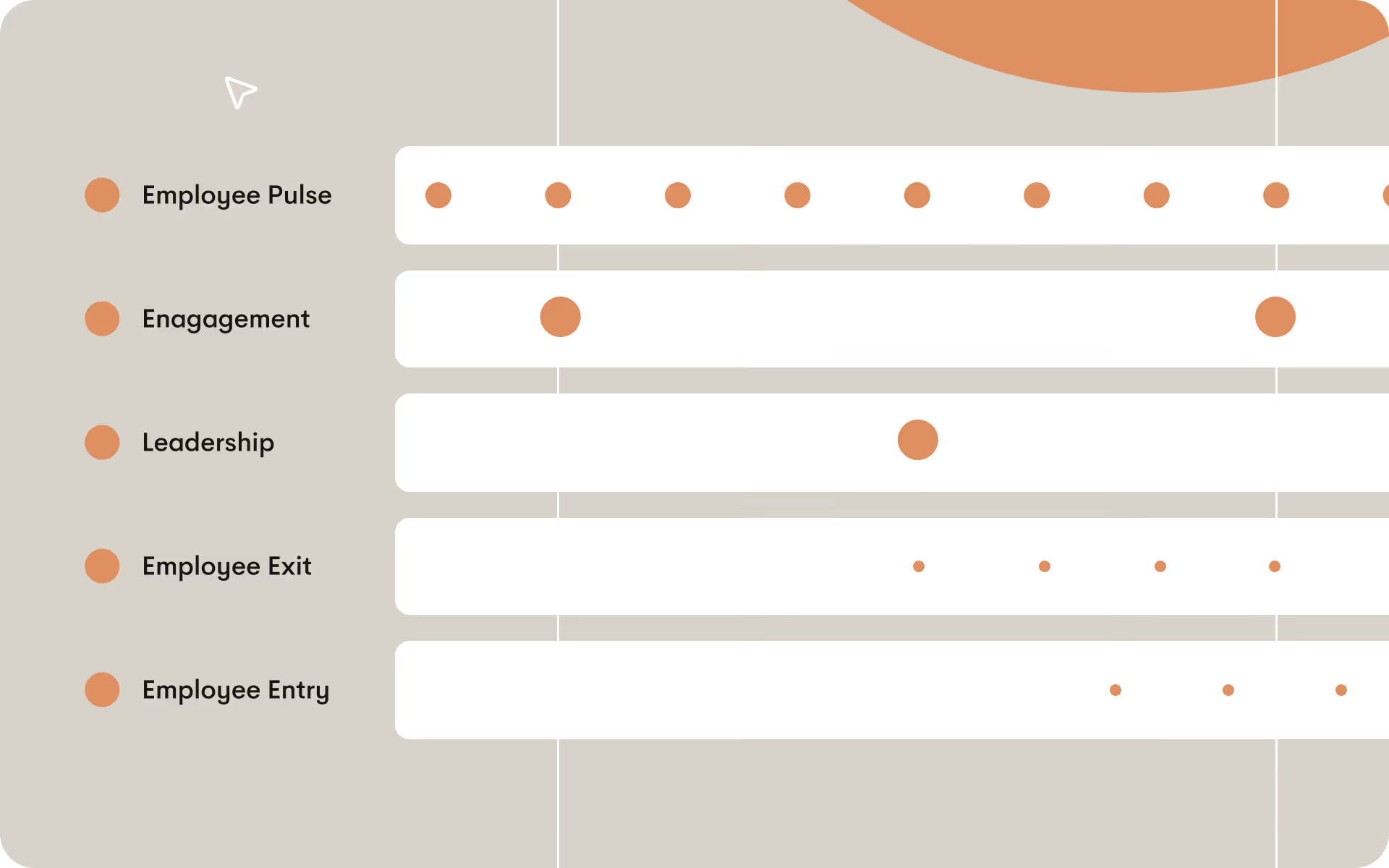
At Enalyzer, a monitoring system is a disciplined way of tracking the same core indicators over time (and the drivers behind them) through a setup tailored to the organization’s context, maturity, and strategy. It is not about running more surveys. It is about building a stable insight framework that leaders can trust.
A strong monitoring system connects what would otherwise be isolated survey snapshots into one coherent storyline, allowing analysis across surveys, touchpoints, and time. This gives leaders a richer understanding of how different parts of the employee experience are connected and where action will make the greatest difference.
It also ensures that insights are meaningful at every level of the organization. In practice, this means providing:
When these elements come together, organizations gain a timely, reliable understanding of how their people are doing and what needs attention.
In short: a monitoring system is a coordinated setup of tailored surveys, consistent metrics, and cross-survey analysis, delivered through clear insight reports and dashboards, that helps organizations understand, prioritize, and act.
This article explains why the annual engagement survey cannot provide that clarity, and why modern organizations need continuous monitoring to make timely decisions and create real improvements.
Many organizations measure the employee experience, and rightly so. But the methods are often too limited to drive meaningful change. Most still rely on the annual engagement survey as their primary source of insight. The survey offers a snapshot, but snapshots are not strategy. They capture what employees felt months ago, not what they are experiencing today, or what may happen tomorrow.
By the time results are processed and translated into action, the underlying issues have often shifted, sometimes significantly. Research increasingly shows that employee perceptions evolve continuously, not in yearly cycles, and that infrequent surveys fail to capture emerging risks, shifts in wellbeing, changes in team dynamics, or early signs of burnout(1)(2)(3). These are well-known limitations of annual engagement surveys, yet many organizations still depend on them as their only employee insight tool.
Consider a common scenario: a team’s engagement declines steadily for months due to workload and unclear expectations, but leadership does not become aware of the problem until the next annual survey. By then, stress has hardened into burnout, collaboration has deteriorated, and key people may already be looking elsewhere. A yearly snapshot simply cannot reveal these dynamics in time to change them.
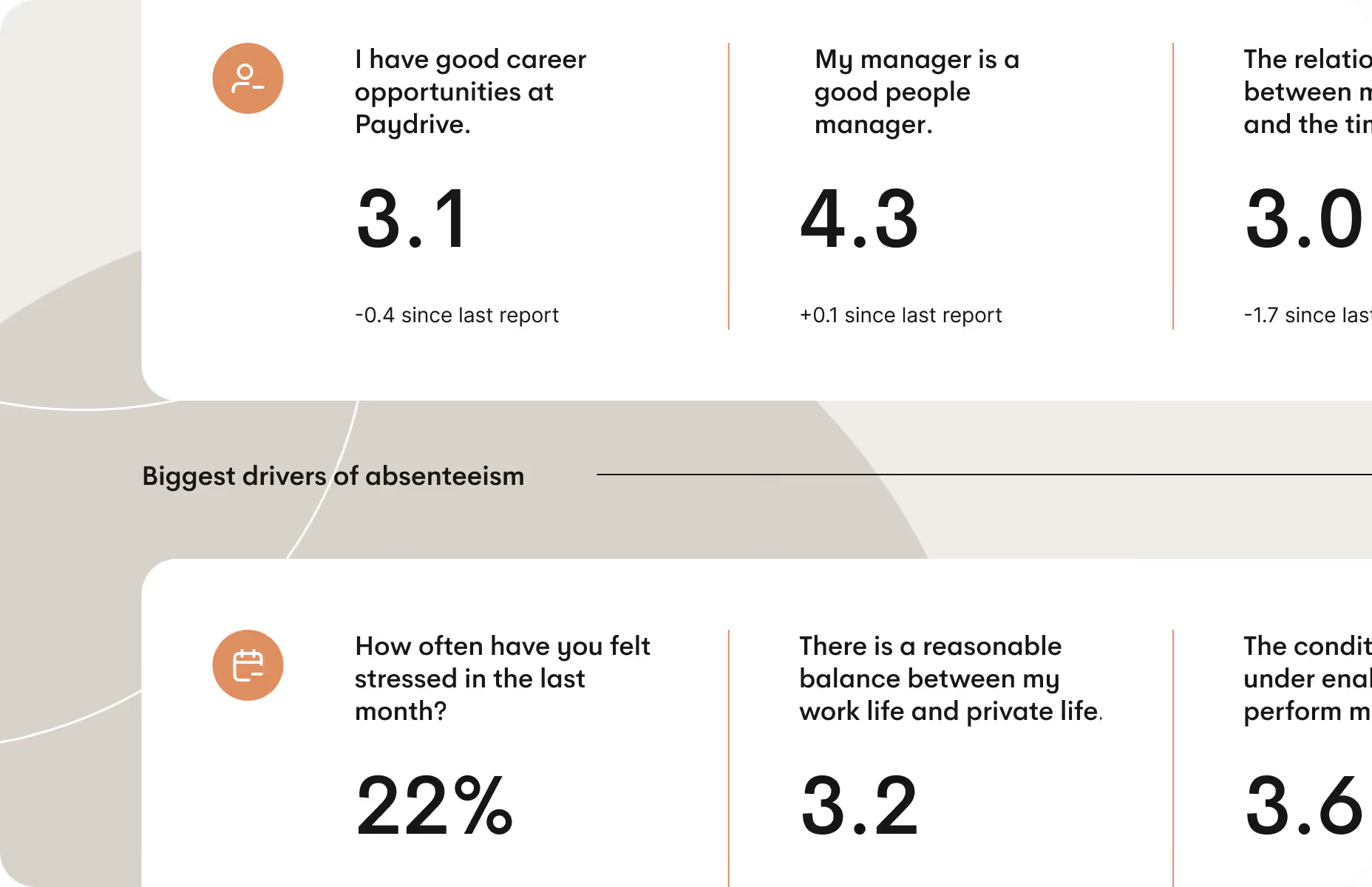
Without more frequent and consistent monitoring of the employee experience, organizations miss patterns, overlook early warning signs, and struggle to understand the root causes behind outcomes like absenteeism, declining engagement, or rising turnover. The core challenge is not the absence of measurement, but the absence of meaningful, continuous, and actionable measurement.
This lack of continuous measurement and insight helps explain why many leaders still rely heavily on intuition, perceptions, and narrative sensemaking when making decisions about people and culture (4)(5)(6). In practice, this means that decisions about the employee experience are often grounded in assumptions rather than evidence. Decisions are not made once a year, they are made every day. And when leaders have no timely data to anchor those decisions, they fall back on impressions, past experiences, or whatever information happens to be most visible.
Industry research reinforces this gap. While executives frequently state that culture and employee experience are strategic priorities, only a minority have the metrics, baselines, or dashboards needed to track them over time(7)(8)(9). Without structured insight, decisions easily become anecdotal - guided by impressions, isolated conversations, or the loudest viewpoints in the room(10).
This lack of measurement has real consequences. When HR cannot demonstrate impact through data, it becomes harder to influence strategic decisions or provide early warnings about risks. Studies consistently show that HR earns strategic credibility when it brings analytical clarity, connects people initiatives to business outcomes, and provides evidence leaders can act on(11)(12)(2).
After more than a decade working with people analytics, one pattern is unmistakable: the distance between what leaders believe about the employee experience and what is actually happening can be significant and costly. Underestimating HR is not just a people problem; it is a profit problem. And today, where performance depends on engagement, collaboration, and wellbeing, understanding the employee experience is essential.
This article outlines the strategic and financial case for employee data, why HR continues to lack influence in many organizations, and how consistent monitoring provides the missing disciplineneeded to replace assumptions with real evidence.
Most organizations recognize the importance of understanding their people, yet few have a clear picture of what actually drives engagement, productivity, wellbeing, or retention. Leaders often sense issues like slowing execution, rising stress, declining motivation, but without reliable insight, it is difficult to understand what’s happening beneath the surface. And when organizations lack visibility into their employee experience, the financial consequences accumulate quietly.
Engagement is not a soft concept; it is a measurable driver of performance, motivation, and wellbeing(13). Organizations with high engagement levels outperform those with low engagement by 23% in profitability, a margin large enough to shift competitive position (14)(9). When people thrive, so does the business.
Studies indicate that inefficiencies tied to unclear expectations, poor collaboration, or inconsistent leadership consume 20–30% of company revenue(15). These losses rarely appear on financial dashboards. Instead, they accumulate through slow decisions, duplicated work, and teams functioning without the support they need.
Burnout builds gradually, often long before leaders recognize the warning signs, and by the time they do, productivity and cohesion have already taken a hit(16). Burnout is estimated to cost organizations up to €12,000 per employee annually when considering lost productivity, absenteeism, and turnover (17).
Across European markets, unplanned absence costs employers thousands of euros per employee each year, adding up to substantial productivity loss(18). Poor experience and declining wellbeing show up as measurable financial consequences.
Replacing a single professional typically costs 75–125% of annual salary once recruitment, onboarding, lost productivity, and knowledge loss are accounted for(19). High turnover is rarely random, it is a pattern. And patterns are predictable when measured.
These are not abstract numbers. They represent real financial consequences for organizations that fail to systematically monitor their employee experience.
Even though leaders repeatedly say that “people are our most important asset,” HR is still not treated as a strategic function in many organizations. This disconnect isn’t due to lack of ambition or competence within HR. More often, it is a structural problem: HR is expected to deliver strategic value without being given the tools, data, ororganizational conditions required to do so.
HR teams manage compliance, recruitment, culture, wellbeing, leadership development, and organizational transformation, but much of their time is still consumed by administrative tasks rather than strategic work(12). Without space for analysis and long-term planning, HR cannot operate at a strategic level.
Despite ranking talent, culture, and leadership as top business priorities, executives often view HR as one of the least influential functions(20). The issue is not whether HR should be strategic, it’s that many organizations lack the systems that would allow HR to operate strategically.
Organizations frequently adopt HR trends without evidence that they drive outcomes. The Financial Times has criticized this tendency explicitly: HR is often pushed to adopt fashionable solutions lacking scientific grounding or operational rigor(21). These initiatives create activity but rarely impact performance.
HR gains influence when it can quantify the effects of people initiatives, connect leadership and culture to business outcomes, predict risks, and advise with analytical clarity(13)(12)(11).Without this foundation, HR is left advocating for investment based on intuition.
When HR lacks influence, organizations fail to invest in the monitoring systems that would give them a deeper understanding of their employees. Blind spots grow, issues escalate, and leadership becomes reactive.
Structured monitoring gives HR what it needs to shift from operational support to strategic partner.
Most organizations believe they are listening to their people because they run surveys. And in a narrow sense, they are. But surveys offer only moments of insight. Monitoring provides something different; a continuous understanding of how the employee experience develops over time.
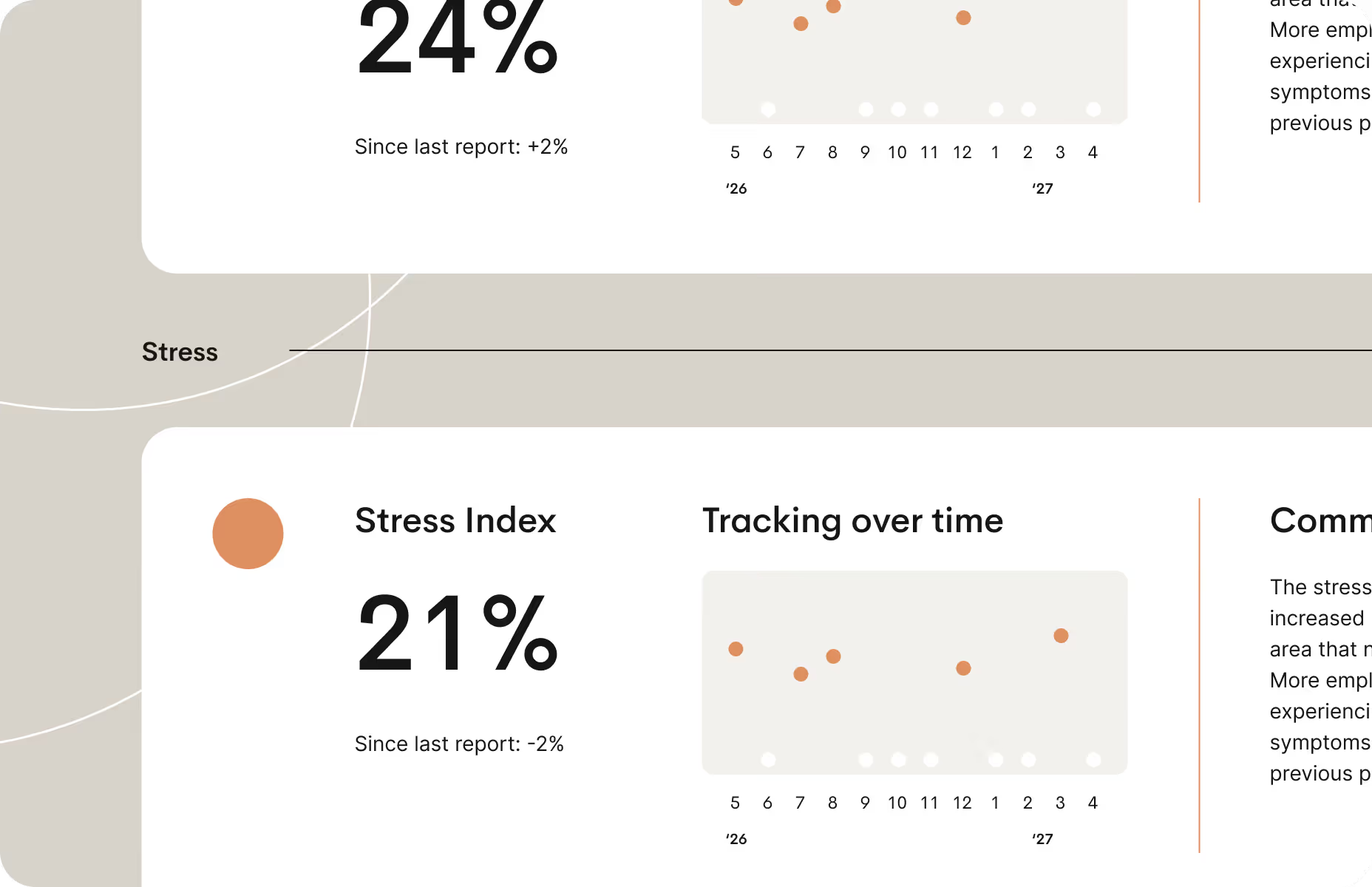
A survey captures a point in time; monitoring shows whether things are improving, declining, or diverging across teams (1)(2). This matters because work shifts far faster than annual survey cycles. Team dynamics, workload pressure, wellbeing, and leadership quality can change within weeks. Annual engagement surveys remain useful, but only as a baseline. Real insight comes from ongoing pulse surveys that track the indicators that matter most.
A mature monitoring system helps HR and leaders:
This positions HR to shift from reactive firefighting to proactive prevention, a defining characteristic of strategic influence.
Most organizations collect data. Far fewer turn it into a coherent system that supports decision-making. Without a monitoring discipline, insights remain fragmented, isolated survey results, disconnected metrics, and conclusions shaped more by timing than reality.
Monitoring transforms scattered data points into a meaningful, actionable picture of how the organization is functioning. It strengthens HR’s credibility and gives leaders the clarity they need to act with confidence.
The case for continuous monitoring of the employee experience is clear. The next step is understanding how to build a monitoring system that fits your organization’s maturity, context, and strategic ambitions.
Most organizations don’t need a full monitoring setup on day one. What matters is building maturity gradually, starting with essential metrics and expanding as the organization develops. At Enalyzer, we provide clear frameworks for the surveys and indicators that form the backbone of an effective monitoring system, always customized to the organization’s unique context.
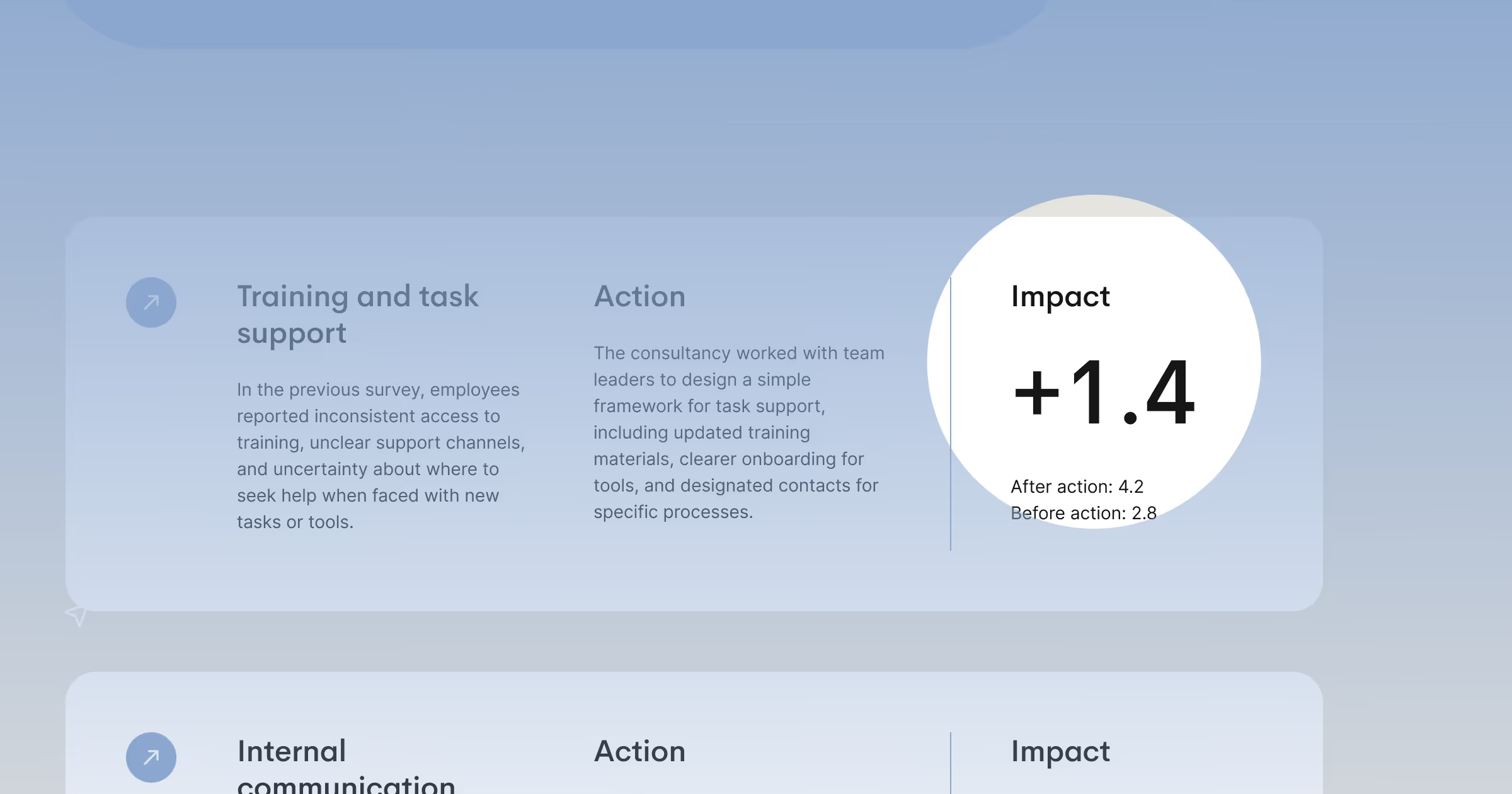
But even the best data only creates value when it leads to action. That is why our approach combines a powerful platformfor continuous measurement with insight reports that help leaders understand what the data means and where to act. From there, our HR consulting partners play a crucial role in turning insight into sustained organizational change.
Our beliefs guide how we design monitoring systems, how we work with organizations, and how we think about the role of employee insights in modern leadership.
At Enalyzer, we believe organizations thrive when they understand their employees deeply and continuously. Monitoring is the missing discipline that allows HR and leadership to move from assumptions to evidence, from reactivity to foresight, and from isolated insights to lasting, strategic impact.
Mathilde Thomsen is Business Development Lead at Enalyzer and has worked with employee experience monitoring and organizational insight for more than a decade. With many years of hands-on experience in Enalyzer’s consulting team, she has supported organizations in translating employee feedback into practical leadership actions and sustained improvement. Schooled in strategy, organization, and leadership, Mathilde focuses on building monitoring systems that connect insight with real organizational change.
We'll match you with the right expert.