A best-practice guide to designing an employee experience monitoring system: where to start, what to measure, which surveys to include, why customization matters, and how to deliver insights via reports and dashboards.

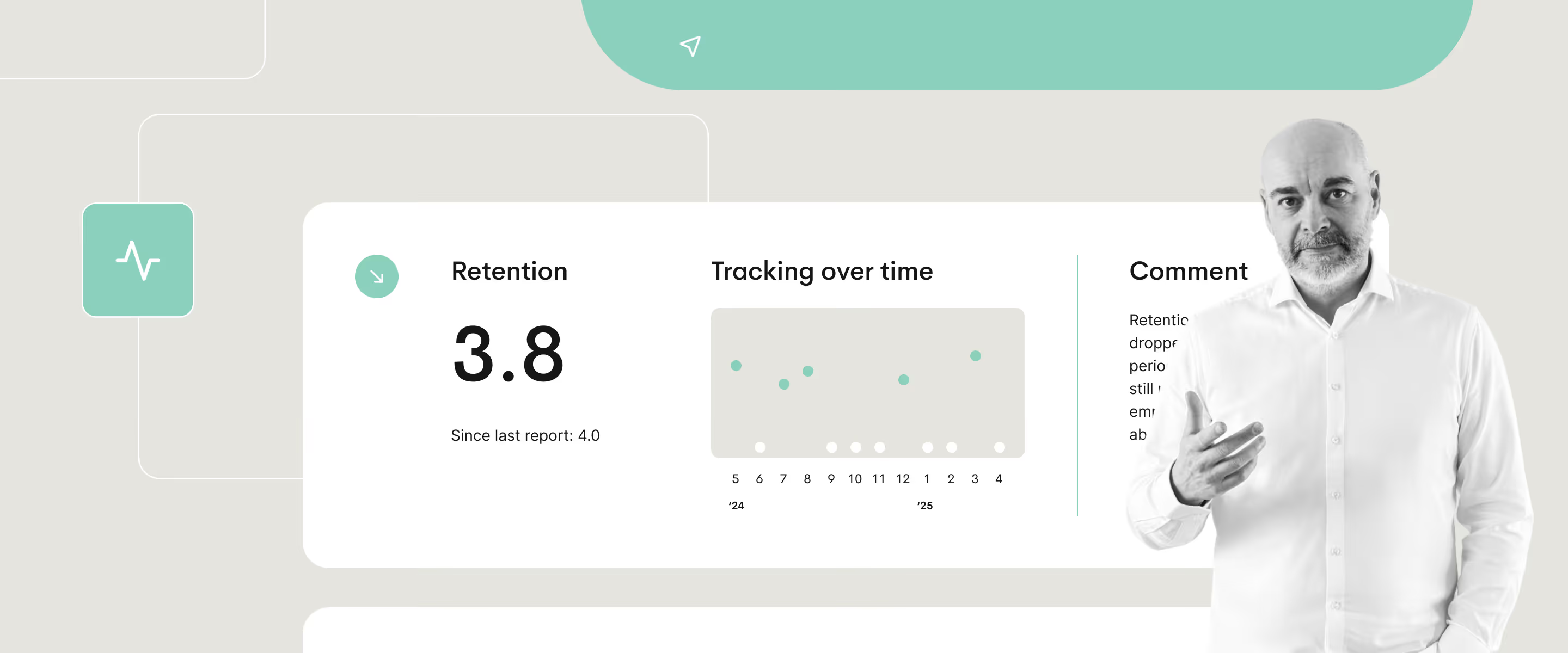

Understanding that annual employee surveys aren’t enough is one thing. Knowing how to build an employee experience monitoring setup that actually works is another. Many organizations want continuous insight but struggle with basic questions: Where do we start? What should we measure? How often? Which metrics matter? What should monitoring actually look like in practice?
The easy choice is to pick one of the many providers offering off-the-shelf, one-size-fits-all monitoring systems. It sounds simple, plug and play. But in reality, standardized setups rarely deliver the value organizations expect. Monitoring the employee experience requires higher ambition -employees deserve better, and the financial case for doing so is unmistakable.
But organizations differ in maturity, culture, priorities, and challenges. A monitoring framework must therefore be customized built around what matters in that organization, not what fits a generic template.
Fortunately, rejecting one-size-fits-all does not mean making things complicated. A monitoring system simply needs to be intentional. The right design fits the organization’s maturity, strategic priorities, and capacity to act. It focuses on the indicators that truly shape employee experience and performance, measured frequently enough to reveal trends and risks in real time. Expertise ensures this design remains simple, structured, and effective - not overwhelming.
In this article, we share our best-practice recommendations for building a monitoring system that is practical, scalable, and tailored to context from the first small steps to a fully integrated, insight-driven setup that leaders actually use.
Not every organization needs a full monitoring setup on day one. What matters is building maturity step by step. Monitoring maturity is not about how many surveys an organization runs, it is about how well it integrates measurement, follow-up, and continuous learning into everyday leadership and decision-making.
A monitoring system can start simple. In fact, many organizations begin with a single engagement survey. The difference from a traditional, old-school approach is that the survey is not the end goal- it becomes the foundation for a broader system of measurement.
When we work with customers, we help identify the right entry point based on their maturity, capacity, and ambitions. From there, we build a monitoring setup that grows with the organization. For organizations already doing engagement surveys, we often begin by analyzing existing data to identify the vital few questions that matter most for that specific organization. A pulse survey is then built around these indicators enabling them to start directly at Level 2.
A valuable baseline that highlights strengths, challenges, and the areas with the biggest influence on engagement. But on its own, it cannot show momentum or whether initiatives are having an effect.
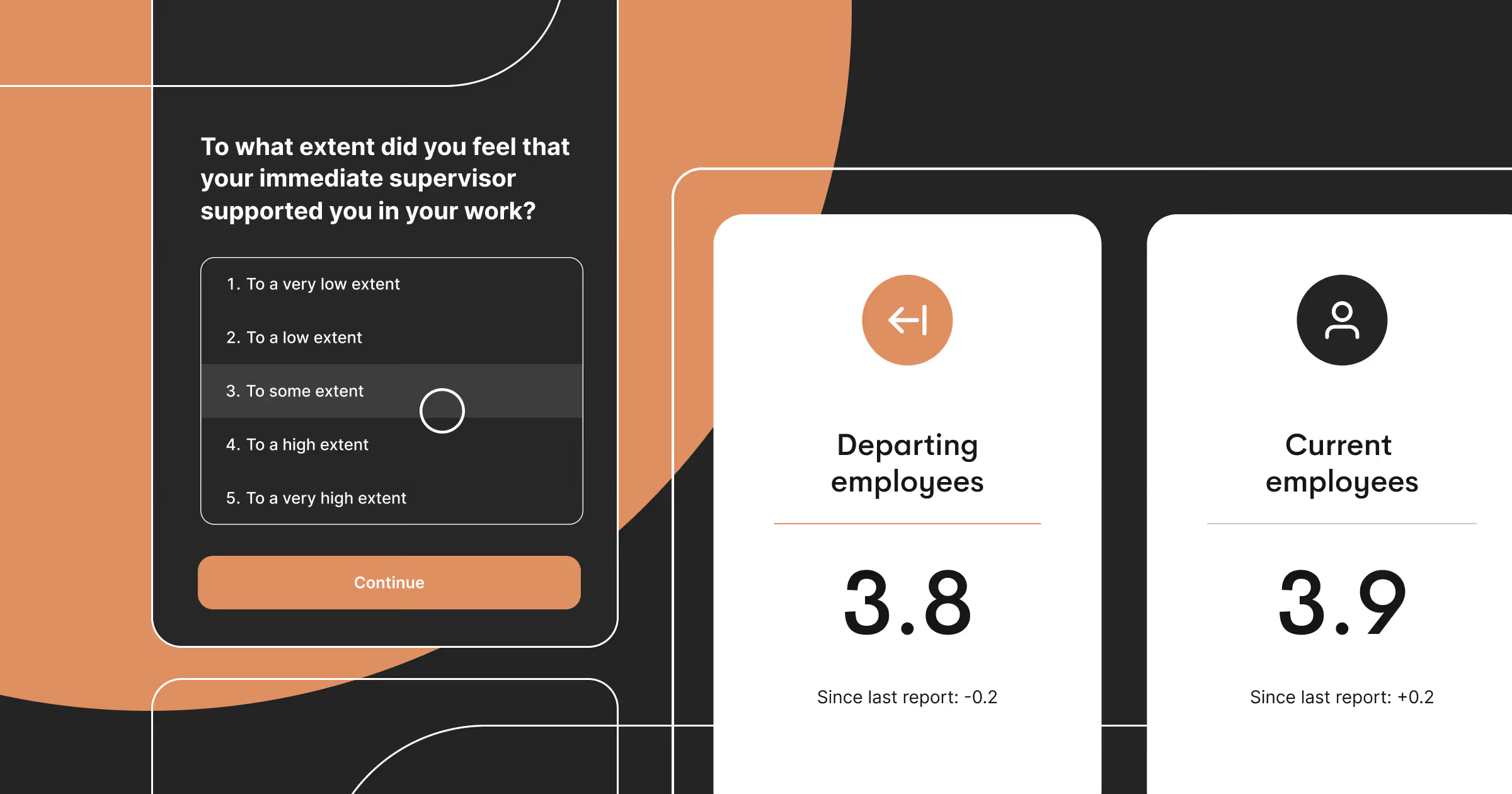
Short, focused measurements on the most relevant indicators such as workload, collaboration, stress, psychological safety, or leadership quality. Pulse surveys reveal early shifts and create continuity between the larger surveys.
At this level, organizations integrate thekey touchpoints that shape the employee journey across multiple surveys. Thiscreates a deeper and more accurate understanding of how employees experiencetheir work, from arrival to departure.
Level 3 brings together:
This enables HR and leadership to see what drives performance, where risks are emerging, and how patterns develop across the organization.
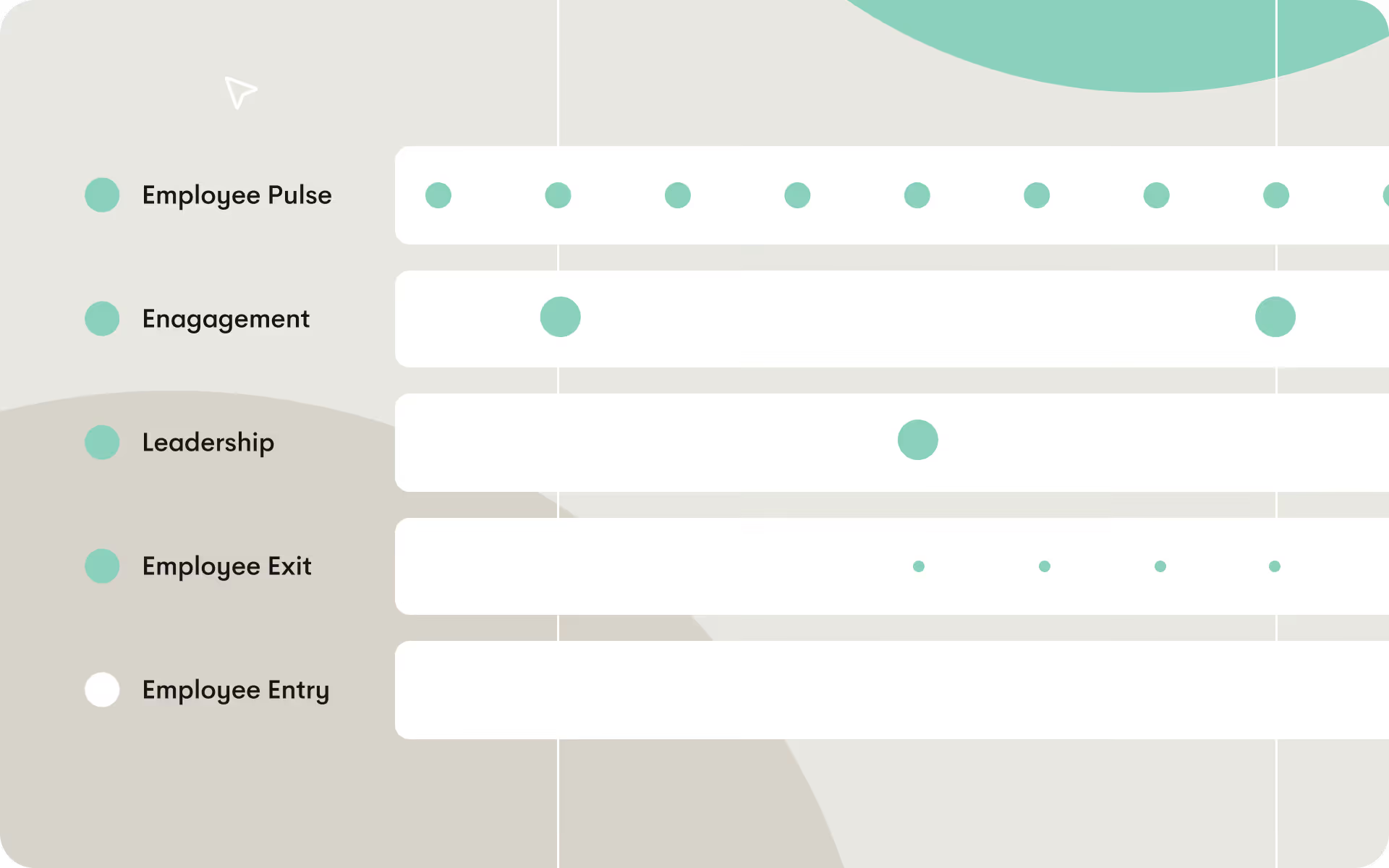
A monitoring system is built from a coordinated set of measurements. While each organization’s needs differ, the surveys below consistently form the backbone of an effective monitoring framework. Enalyzer provides strong, research-based templates for each, always customized to the organization’s context and maturity level.
A strong monitoring system is never identical across organizations. Examples:
Most importantly, organizations should only measure what they have the ability, and intention, to act on. Anything else is wasted effort and risks eroding employee trust.
Surveys are the method; metrics are the substance. A monitoring system becomes effective not because it runs many surveys, but because it tracks the right metrics consistently. Designing such asystem therefore begins with identifying what to measure, not with deciding how many surveys to run.
A strong monitoring system uses a tailored set of indicators that reveal how people feel, what drives their behaviour, and where leaders should focus their attention. Across organizations, several categories of metrics consistently form the foundation.
These core indicators reflect the overall state of the employee experience:
These function as the organization’s vital signs. They show whether the employee experience is improving, declining, or stable, and help leaders detect early shifts before they escalate.
Many organizations focus primarily on motivation, satisfaction, or engagement. However, our experience shows that leadership and stress must be included among the core metrics. Leadership is one of the strongest predictors of engagement, performance, and wellbeing. Managers account for up to 70% of the variance in engagement(1). Stress indicators, likewise, often shift early and act as leading signals of burnout, turnover risk, and declining team functioning.
Together, these core metrics provide the most accurate and early view of organizational health.
Engagement and satisfaction are outcomes; leaders cannot improve them directly. What leaders can influence are the drivers behind them(2), such as:
Different surveys emphasize different drivers: onboarding focuses on clarity and support; pulses often track workload; engagement surveys assess leadership, collaboration, and development.
The key is consistency, tracking the same drivers over time reveals patterns, cause-and-effect relationships, and where targeted interventions will matter most.
Employee insights become far more powerfulwhen connected to relevant business metrics, such as:
A monitoring system must measure more than sentiment. It must measure the dynamics that shape performance and business outcomes and do so consistently over time.
When organizations track the right combination of core metrics, drivers, and business outcomes, patterns become visible, priorities sharpen, and leaders gain a reliable compass for decision-making.
Templates and standardized frameworks are not the problem. In fact, they are valuable. A well-tested framework provides structure, saves time, and builds on years of knowledge about what drives engagement, leadership, and performance. In many cases, it is the ideal foundation for a customized setup. No organization needs to reinvent the wheel.
The problem arises when a fully standardized, off-the-shelf solution is used as is. It may launch quickly or offer easy benchmarking, but it rarely delivers real understanding. It produces neat, comparable results yet often misses what actually matters inside the organization.
Organizations differ in strategy, culture, maturity, workforce composition, and operational reality. A template that ignores these differences risks measuring the wrong things or measuring the right things in a way that does not reflect context. The result is insight that feels generic, repetitive, or disconnected from true priorities.
Good survey design is not plug-and-play. It requires psychological insight in the wording, methodological rigor in scaling and structure, and a clear understanding of how different drivers influence engagement and performance. When surveys are thoughtfully designed, they reveal how people truly experience their work and where the organization has the strongest opportunities to improve.
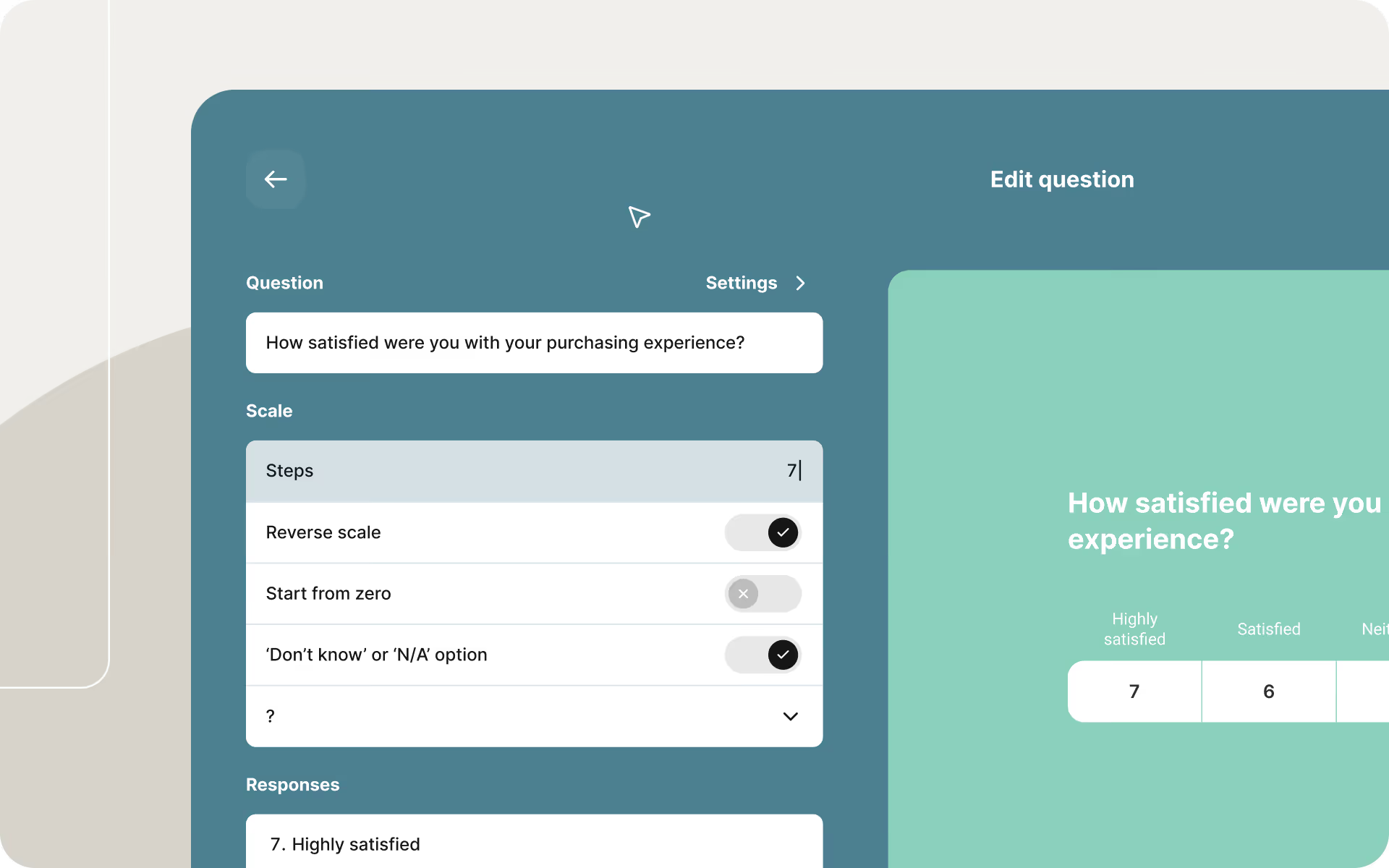
Even when two organizations run the same type of survey, the underlying drivers can differ substantially. For example:
If the measurement model does not reflect context, leaders risk misdiagnosing issues, focusing on the wrong priorities, or missing critical root causes. Misaligned surveys lead to misaligned decisions.
A tailored monitoring system ensures that metrics reflect the organization’s goals, language, work environment, and strategic ambitions. It aligns insights with the leadership agenda grounding decisions in reality, not assumptions or generic templates.
A monitoring system must reflect the organization it serves. Anything less risks shallow insight and misguide daction.
Collecting data is never the goal. Insight is. Yet many organizations struggle with exactly that: they gather large amounts of employee data, but much of it sits unused or fragmented across systems. Survey fatigue increases, leadership becomes overwhelmed, and HR is left trying to interpret results after the moment for action has passed.
Enalyzer’s role is to transform measurement into understanding and understanding into decisions.
A monitoring system only creates value when organizations know what is happening, why it is happening, and what to do next. This is why our approach combines platform, analytics, and consultancy into a single, coherent solution.
Different stakeholders need different levels of insight. That is why Enalyzer delivers three complementary insight tools, each designed for a specific purpose in the organization’s decision-making structure.
Best for: strategy, prioritization, leadership alignment, and board-level discussions.
The Employee Insight Report provides a comprehensive narrative that connects data across surveys, time periods, and organizational layers. It integrates all relevant metrics and drivers, highlights the strongest performance levers, identifies emerging risks early, and presents clear, evidence-based priorities.
A key strength of the report is that it explains the “why,” not just the “what.” Our analytical approach includes:
The result is a coherent storyline. Managementand HR don’t just receive numbers, they understand why engagement or satisfaction is shifting, which factors matter most, and where action will have the greatest impact. Not simply the lowest scores, but the drivers with the strongest influence on organizational outcomes.
The Employee Insight Report helps management and HR make strategic, organization-wide decisions grounded in evidence rather than assumptions.
Best for: practical, team-level action and follow-up.
Managers do not need a full analytics engine, they need clarity. Team Commented Reports translate survey results into focused, accessible insights that make sense at the local level.
These reports provide:
Even at the team level, the analysis highlights what matters most, not just what scored highest or lowest. Managers see which factors have the strongest impacton their team's engagement, wellbeing, or performance helping them prioritize the actions that will truly move the needle.
The result is practical guidance that empowers managers to take ownership of the parts of the employee experience they directly influence, while staying aligned with the organization’s overall priorities.
Best for: ongoing tracking, early-warning signals, and in-depth exploration by HR and managers.
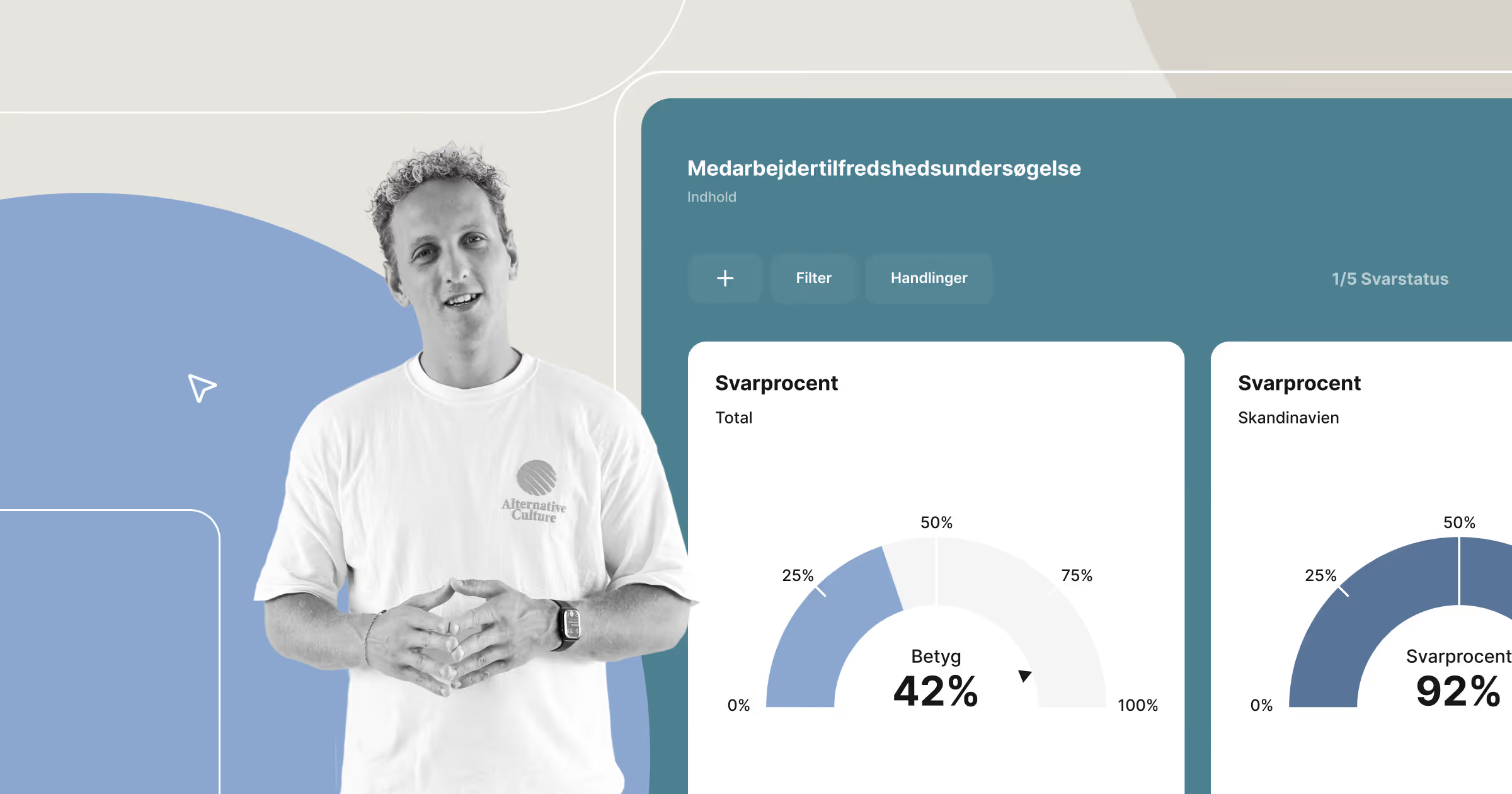
Real-time dashboards provide a broad yet detailed view of the organization. They are ideal when leaders or analysts need to explore patterns, verify hypotheses, or investigate specific areas more deeply.
Dashboards enable:
These dashboards serve as the analytical backbone of the monitoring system while Insight Reports and Team Reports support strategic and local decision-making.
Together, these three deliverables ensure that every level of the organization gets the right insight at the right time:
Behind this work is Enalyzer’s secure, GDPR-compliant platform and a consulting team that supports organizations end to end: from scoping and survey design to analysis and interpretation. We help organizations monitor their status quo, identify emerging risks, track the impact of initiatives, and build the internal muscle required to work with employee data over time. A serious partner for organizations that want insight to lead to real change.

Our role is to provide clarity: rigorous measurement, a simple setup, sound analysis, and a coherent narrative that helps leaders truly understand what is happening in their organization. We equip HR and leadership with the insight foundation they need to make informed decisions and, together with our consulting partners, we ensure that organizations have the support required to act on those insights.
Monitoring is not a checkbox or a technical exercise. It is a leadership discipline and the foundation for understanding people, steering culture, and improving intentionally rather than reactively.
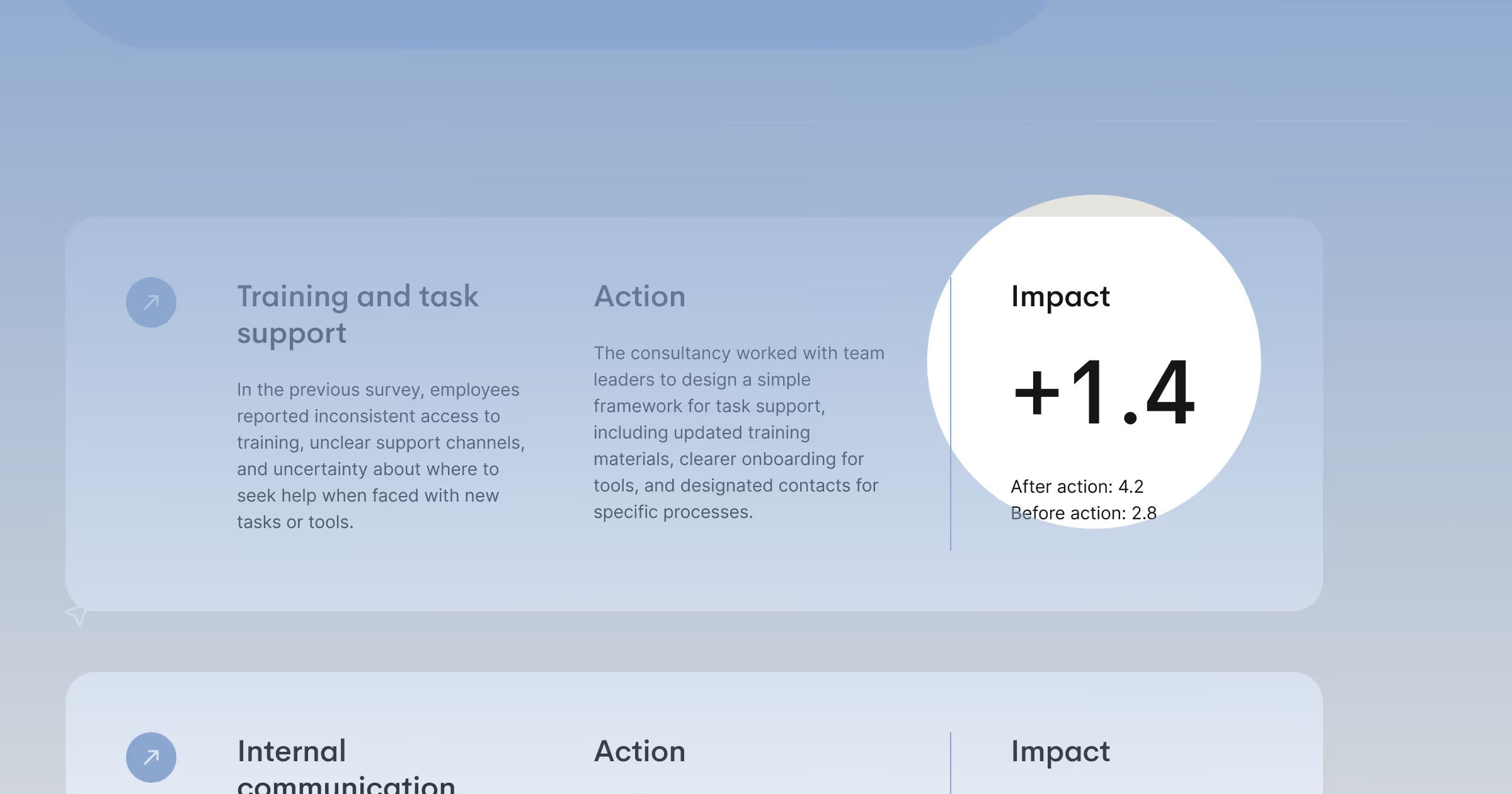
A monitoring system creates clarity, but clarity alone does not create change. Turning insight into real improvement requires competence, continuity, and structured follow-up inside the organization. This is where our consulting partners play a crucial role. Our HR consulting partners help leaders translate data into action by working with the insights, strengthening leadership capability, and driving long-term organizational development.
Mathilde Thomsen is Business Development Lead at Enalyzer and has worked with employee experience monitoring and organizational insight for more than a decade. With many years of hands-on experience in Enalyzer’s consulting team, she has supported organizations in translating employee feedback into practical leadership actions and sustained improvement. Schooled in strategy, organization, and leadership, Mathilde focuses on building monitoring systems that connect insight with real organizational change.
We'll match you with the right expert.