A clear explanation of why employee experience insights often fail to create change and how HR consulting partners help organizations move from monitoring to measurable improvement.



Even the strongest monitoring system can fail if organizations cannot act on the insights it produces. A continuous flow of employee data is valuable, but only when people see that their feedback leads to meaningful change. Otherwise, even a well-designed system risks eroding trust, lowering participation, and reinforcing the belief that “nothing changes here.”
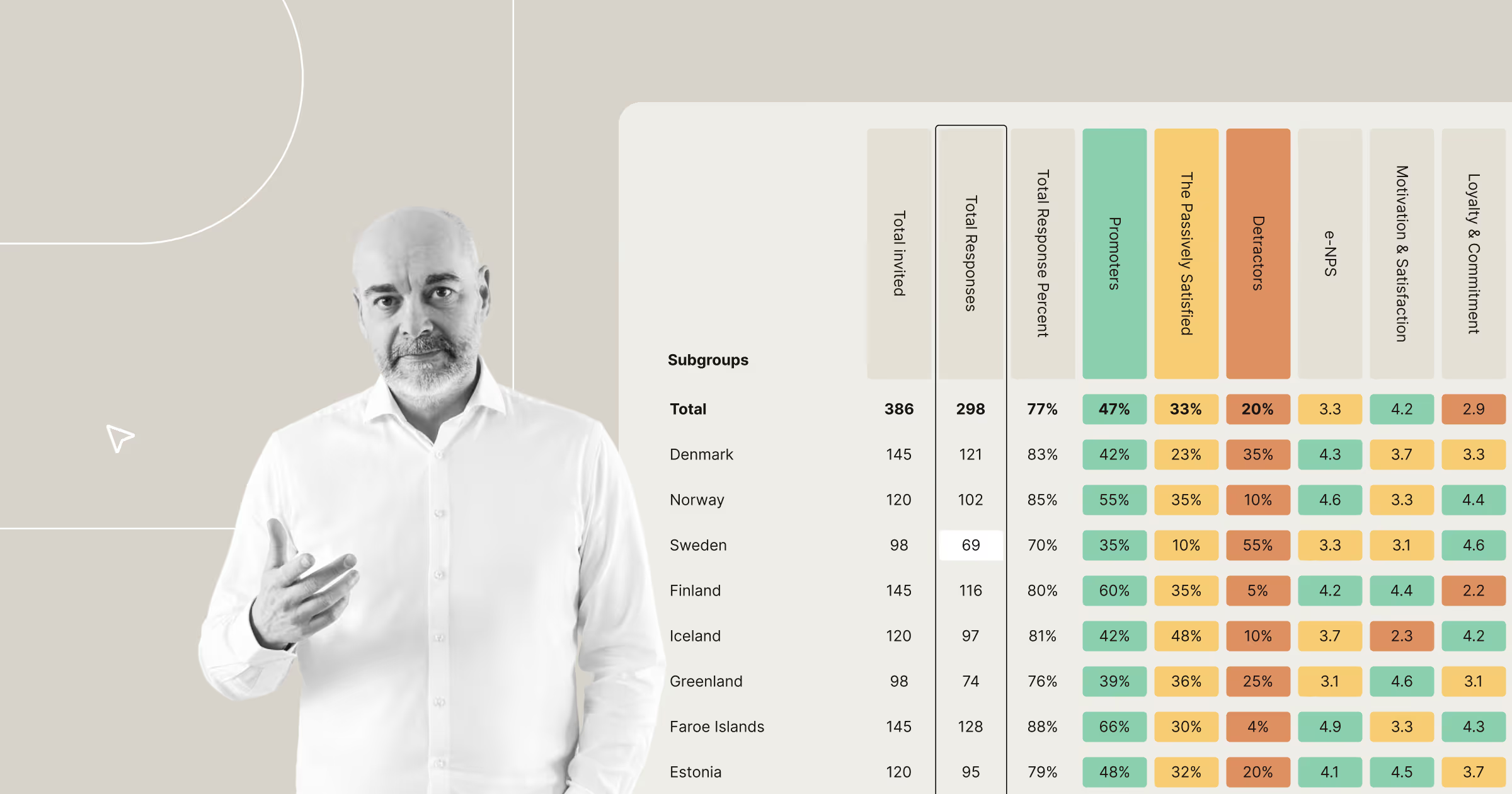
Continuous monitoring gives organizations what annual engagement surveys never could: an ongoing understanding of how employees are doing, where risks are emerging, and which leadership or cultural factors require attention. But insight alone is not enough.
Turning employee survey results into real improvement requires competence, time, and structured follow-up, something many organizations simply do not have the capacity to sustain internally.
This is where employee experience consulting becomes essential. HR consulting partners bridge the last mile of the monitoring system: they help leaders interpret their results, translate insights into focused actions, and build the behaviours and routines that create lasting change.
This article explains why acting on employee insights is harder than it looks, why dashboards and micro-learning tools fall short, and how the right HR consulting partnership turns insight into measurable, long-term improvement.
Most organizations are not short on employee data, they are short on the ability to turn that data into action. Even when monitoring provides clear insights, several barriers consistently get in the way.
Most managers want to act on their results, but they are rarely given:
Many of the “tools” managers do receive (like autogenerated recommendations, micro-learning, five-minute videos) may raise awareness but don’t change behaviour.
They don’t teach leaders how to follow up with their team or what to do in practice. The result is hesitation, superficial fixes, or no action at all.
HR teams juggle compliance, recruitment, communication, development, and crisis management. As a result, follow-up on employee insights often becomes:
Without dedicated support, even good intentions struggle to become coordinated action.
When feedback does not lead to visible change, employees quickly conclude that their input does not matter. This erodes psychological safety, lowers participation, and undermines the entire monitoring system. As such, a monitoring setup is only as strong as the organization’s capacity to follow up.
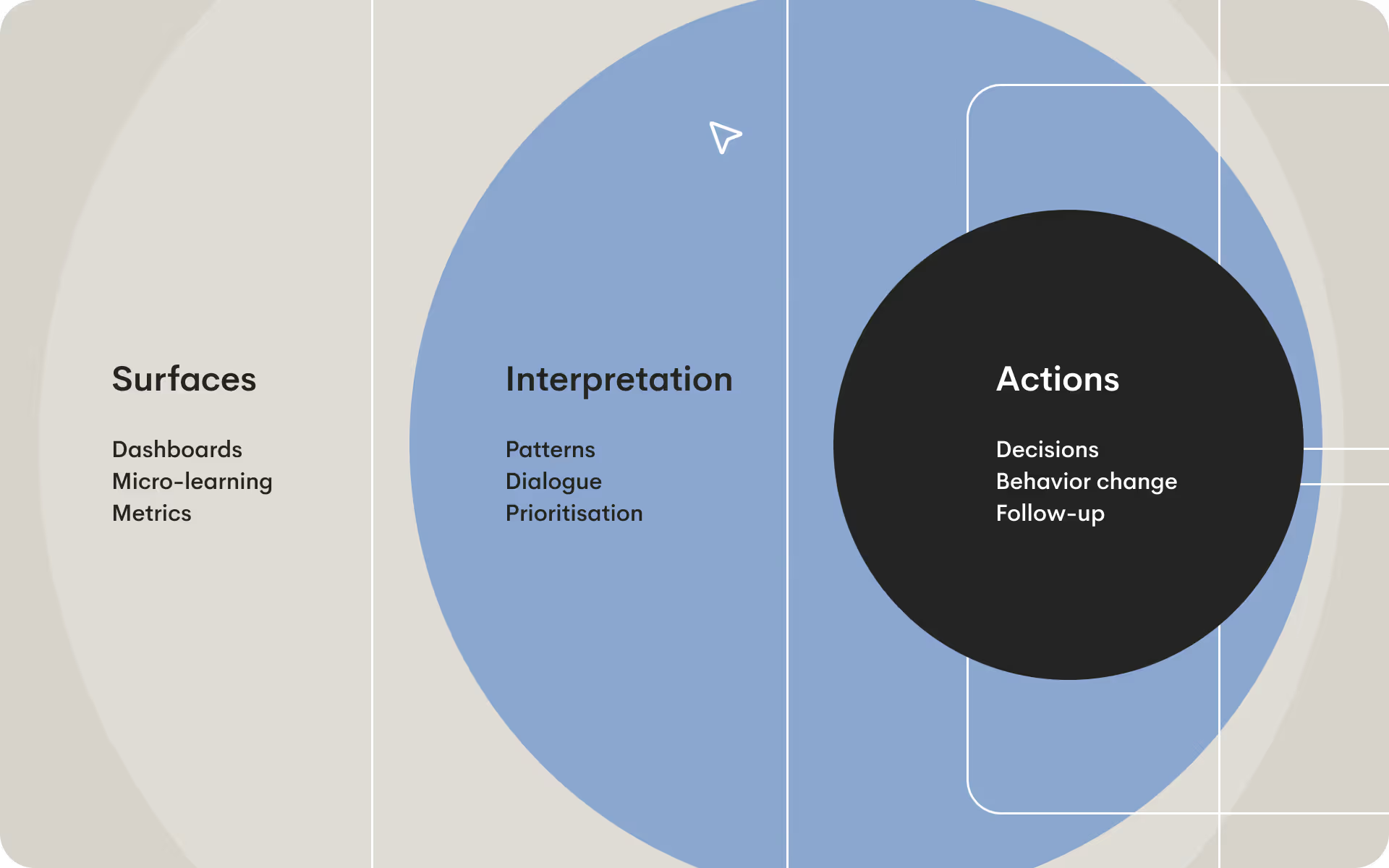
A monitoring system with the right dashboards and reports can show what is happening, where risks are emerging, and which drivers matter most, but insight on its own rarely creates change. Many organizations assume that once managers “see the numbers,” improvement will naturally follow. In reality, this seldom happens.
Dashboards are essential for transparency and analysis. They help leaders explore patterns, understand differences across teams, and identify where risks may be developing.
But dashboards do not:
A dashboard can start the right conversation but it cannot guide the follow-up needed to change behaviour.
The market is full of engagement platforms that promise quick leadership improvement: five-minute videos, bite-sized learning modules, auto-generated action plans. They may spark awareness, but they do not create real behavioural change. Micro-learning treats leadership as a checklist, not a discipline. It tells managers what to do in theory, but not how to do it with real people in real settings.
Imagine a manager whose team signals unclear expectations and rising workload. The system replies with a five-minute video titled “How to Communicate Better.” The advice is generic. The context is missing. The challenge remains.
And the manager is still alone, now with the added pressure of “fixing” something without meaningful support.
No leader becomes better because of a short video or an auto-generated tip. Leaders improve when someone helps them interpret their team’s feedback, choose realistic actions, practice new behaviours, and follow up consistently over time. Real improvement requires competence, practice, and guided follow-up, not more dashboards, not more videos, and not more automated advice.
Once leaders understand their feedback, the real work begins: translating insight into new habits, clearer structures, better collaboration, and stronger leadership behavior. This is where many organizations struggle. Not because managers are unwilling, but because meaningful change is complex, sensitive, and time-consuming.
Most managers want to improve their teams. What they often lack is:
These are not shortcomings. They are natural limitations of busy leaders operating in high-pressure environments.
This is why HR consulting partners play such a crucial role. Trained consultants bring experience working with diverse teams, leadership styles, and organizational challenges. They know how to turn a set of survey results into a practical improvement process.
They help teams choose a few focused actions, not ten disconnected initiatives. They ensure follow-up happens, even when day-to-day operations pull attention elsewhere. They provide the psychological safety required to navigate sensitive issues without escalation or avoidance. Most importantly, they create the continuity that organizations often cannot maintain on their own.
Consulting partners help leaders move from:
They turn monitoring into improvement — and improvement into momentum.
Not every organization needs the same type of support and that is precisely why we work with a diverse network of HR consulting partners.
Some are specialists in leadership development, others in collaboration, wellbeing, culture, or organizational change. All are trained to work with Enalyzer’s insight models and commented reports, ensuring that their work is firmly grounded in the data.
Some organizations already have this capability internally. If you have HR professionals, organizational psychologists, or leadership coaches who can guide teams through interpretation and follow-up, that is excellent. In those cases, we make sure your internal experts are fully onboarded in our models, surveys, insight reports, and dashboards so they can use the system effectively.
You may also already be working with an external HR consulting partner. We don’t ask you to replace them; we help them work with our framework. Your partner can be trained to understand your monitoring setup, interpret insights, and translate them into action within the structure you already trust.
For organizations that don’t have this capacity internally or externally, we can match you with a consulting partner whose expertise fits your needs.
Your insights determine the expertise you require:
Some organizations need occasional support. Others rely on regular guidance as an extension of their people function. In both cases, the goal is the same: ensure that insight leads to action and that action leads to measurable improvement.
Working with the right partner gives leaders the structure, competence, and continuity they need without overwhelming internal resources.
We believe real organizational change requires expertise in different fields: in data, in analysis, and in how to turn insight into new behaviours. No single provider can excel at all of these and we don’t pretend to. Instead, we focus on what we do best and partner with experts who excel at the rest. When each party brings their strengths, organizations get both clarity and capability and real change becomes possible.
We deliver the insight engine:
In short: We make sure you know exactly what is going on: clearly, accurately, and on time.
They deliver the capability to turn insight into action:
Partners help leaders practice new behaviours, strengthen collaboration, and embed new habits; the things data alone cannot achieve.
A monitoring system gives organizations clarity, but clarity alone does not create change.
Insight only becomes valuable when leaders have the support, competence, and structure to act on it. Dashboards highlight issues, surveys reveal patterns, and reports point to priorities, but none of these, on their own, change behaviour.
Real improvement requires guided follow-up, deliberate practice, and the right partners around the table.
This is why we deliver the insight engine, and why our consulting partners help turn that insight into lasting organizational development.
Mathilde Thomsen is Business Development Lead at Enalyzer and has worked with employee experience monitoring and organizational insight for more than a decade. With many years of hands-on experience in Enalyzer’s consulting team, she has supported organizations in translating employee feedback into practical leadership actions and sustained improvement. Schooled in strategy, organization, and leadership, Mathilde focuses on building monitoring systems that connect insight with real organizational change.
We'll match you with the right expert.