High response rates in surveys improve data quality. Results depend on relevance, timing, trust and clear communication.


For most survey projects, achieving a high response rate is vital. The response rate directly affects the reliability and credibility of your results. When too few people respond, the risk of bias increases and it becomes harder to act confidently on the insights you collect.
In this article, we break down what a good response rate looks like, how you can actively improve it before and during data collection, and why response rates can still be low even when best practices are followed.
A high response rate increases confidence in your results. When a large share of your target group participates, the data better represents reality and reduces the risk that only the most engaged or dissatisfied respondents are heard. Low response rates, on the other hand, make it harder to draw conclusions and justify decisions based on the results.
Imagine you are running an employee satisfaction survey and only 45% of employees respond. Is that a good result? The answer depends on the type of survey and how important the topic is to respondents.
There is no universal benchmark that applies to all surveys. Response rates are strongly influenced by relevance, context, and audience.
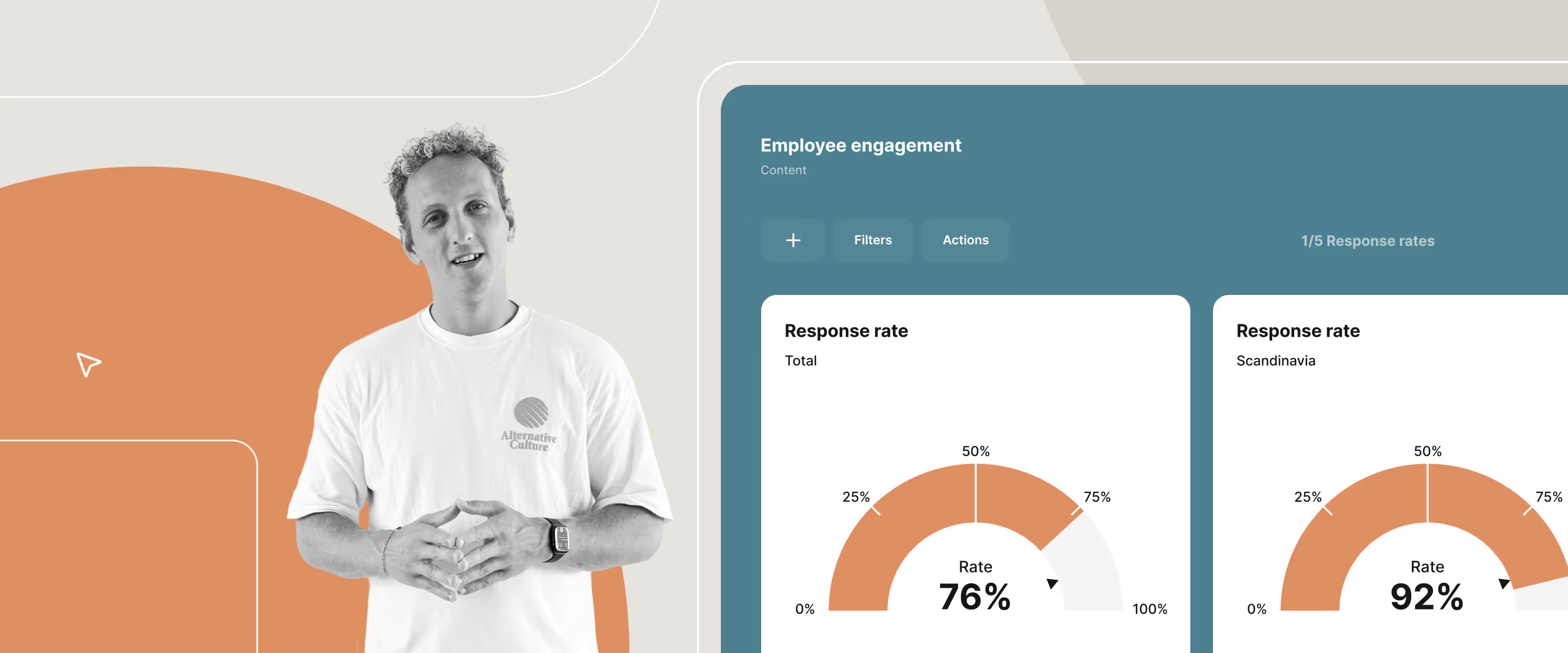
Employee engagement surveys typically achieve high response rates because they focus on topics that matter directly to employees, such as leadership, work environment, and development opportunities. Based on Enalyzer Consulting’s experience, these surveys should aim for response rates of at least 80% among desk workers and around 75% among non-desk workers.
Customer satisfaction surveys usually have lower response rates. A response rate of around 25% is often considered reasonable, but the actual level varies widely by industry and touchpoint.
For example, if you receive a satisfaction survey from your property management company, your home is likely very important to you, and response rates around 50% are realistic. In contrast, feedback requests from delivery companies typically see much lower response rates, often closer to 10%, unless something has gone wrong.
Much of the work to ensure a high response rate happens before the first invitation is sent.
Clear communication is essential. Respondents need to understand why they are being asked to participate, how long the survey will take, and how their feedback will be used. Using Enalyzer’s invitation texts and survey text elements allows you to communicate this clearly and consistently.
Preparing respondents in advance can also make a significant difference. For customer surveys, it can be effective to let customers know ahead of time that they may be asked for feedback. For employee surveys, internal communication channels should be used to explain the purpose of the survey and how results will be followed up.
Survey design is another critical factor. Surveys should be short, relevant, and logically structured. Questions that are unclear, repetitive, or not applicable to all respondents increase dropouts. Thorough testing before launch helps identify and remove unnecessary friction.
Once the survey is live, timing and follow-up become key drivers of participation.
Sending surveys at the right moment significantly improves response rates. With Enalyzer’s automations, surveys can be triggered automatically after key events, such as a customer support interaction, or scheduled relative to milestones like an employee’s first weeks on the job. Scheduling invitations and reminders ensures respondents are contacted at times when the topic is still top of mind.
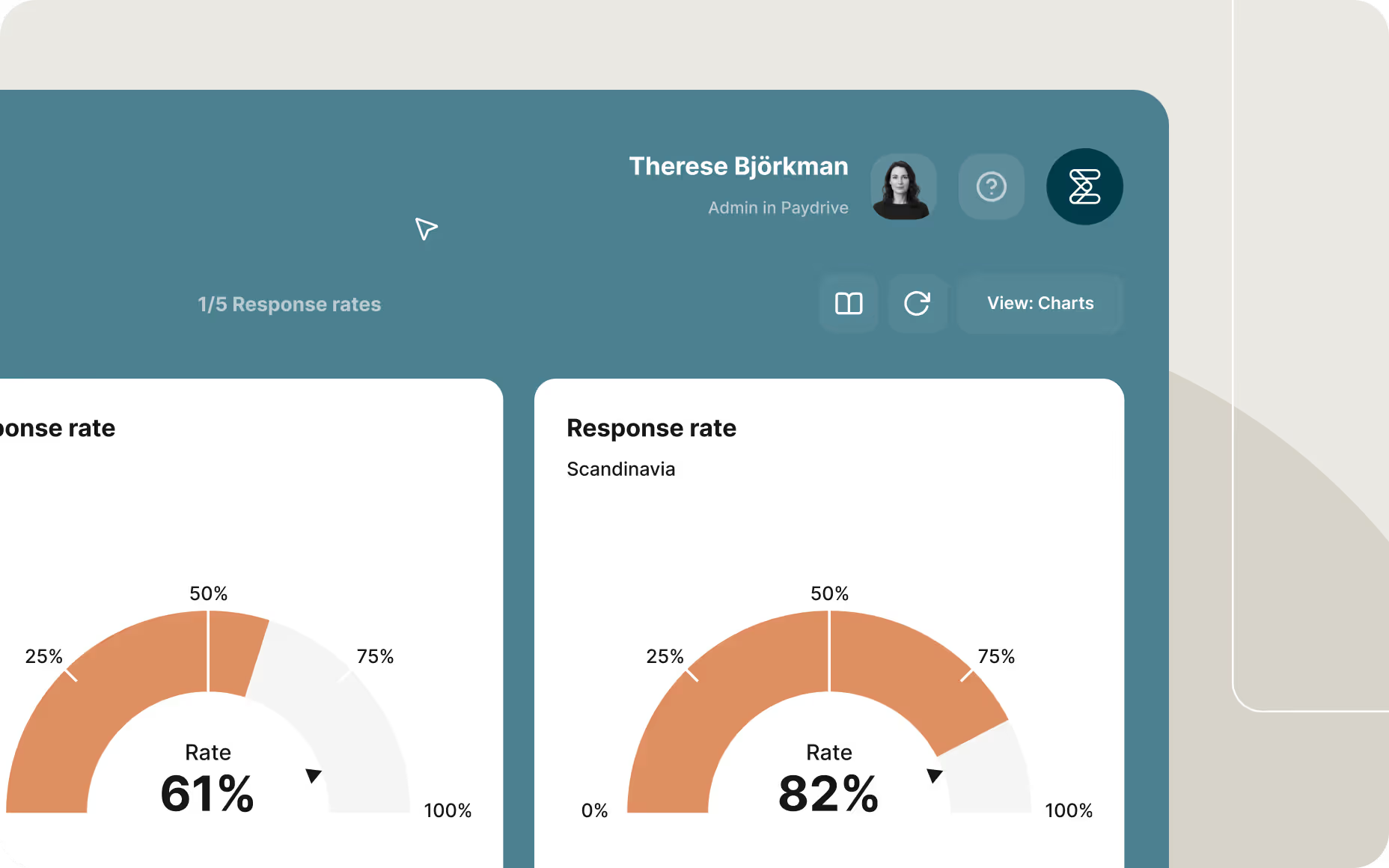
During data collection, involving stakeholders who are close to the respondents can boost participation. Line managers are often the most effective drivers for employee surveys, while account managers can play a similar role in customer surveys. Enalyzer reporting allows you to share live response rate dashboards filtered by team or account, making progress visible and encouraging follow-up.
Incentives can further increase participation, particularly in customer surveys. Raffles or small rewards are commonly used and can be effective when aligned with the survey effort. In employee surveys, where anonymity is critical, shared incentives such as team-based rewards can be a better alternative.
High open rates do not guarantee high completion rates. Respondents often abandon surveys if they feel the effort required is too high.
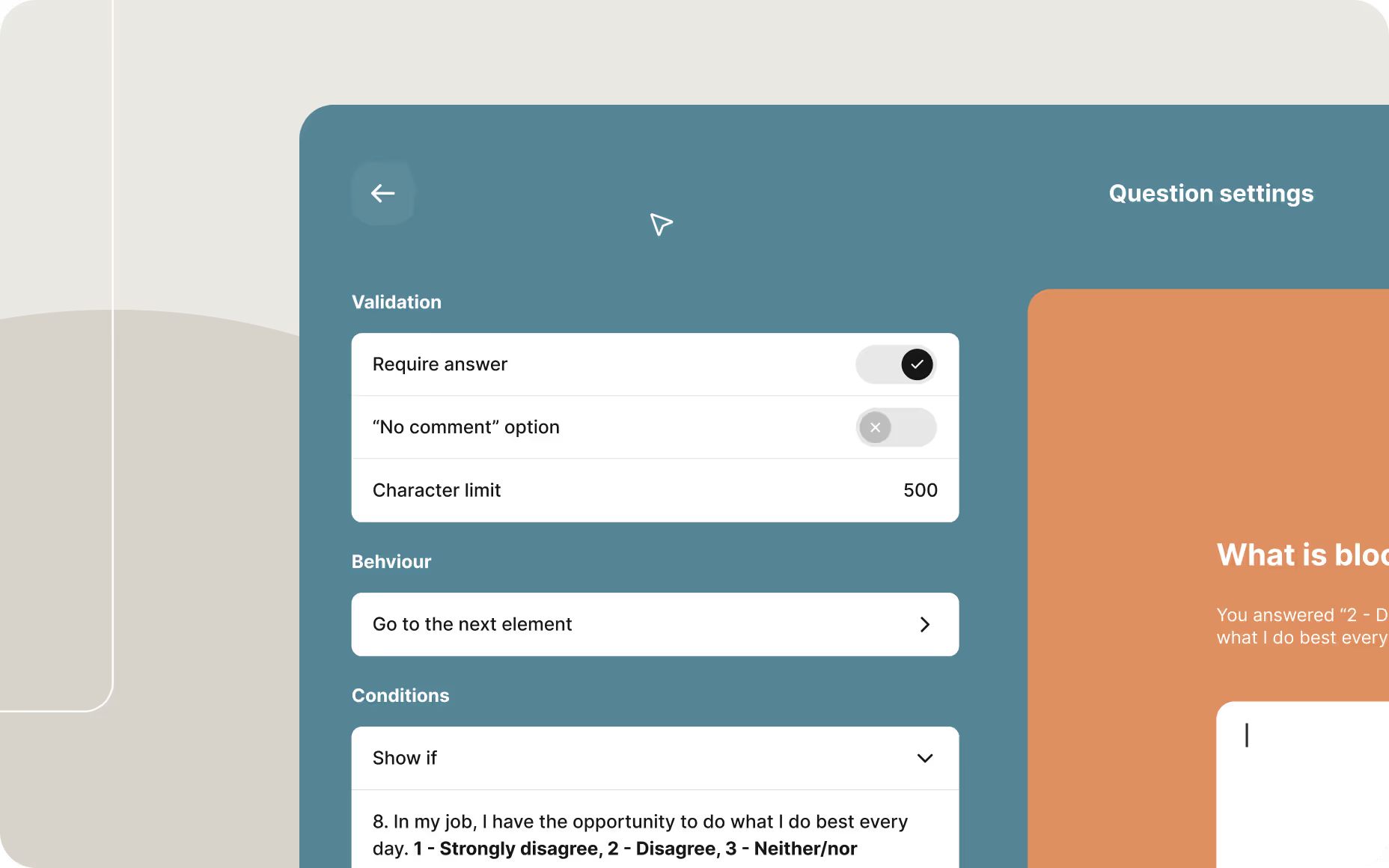
Survey fatigue is typically caused by surveys that are too long, poorly organized, or filled with irrelevant questions. Using Enalyzer’s jumps and conditions helps ensure respondents only see questions that are relevant to them, reducing frustration and improving completion rates.
Another important detail is how the survey ends. Using an end-page survey element ensures that respondents are automatically registered as completed when they reach the final page. This avoids situations where respondents believe they have finished but close the browser before formally submitting their response.
Even well-designed surveys can struggle with low response rates, and the reasons are often structural rather than technical.
Lack of trust is a common issue. If respondents do not believe their feedback leads to action, or if they fear negative consequences from honest answers, participation will suffer. Trust is built through transparency, confidentiality, and visible follow-up on previous surveys.
Over-surveying is another frequent challenge. As organizations collect more feedback, respondents can become overwhelmed and start ignoring survey invitations altogether. Carefully planning survey frequency is essential to avoid fatigue.
Sometimes the problem lies in the invitation itself. If an email looks like spam or is caught by spam filters, it will never be opened. Using recognizable sender names, clear subject lines, and regularly checking Enalyzer’s email status page helps reduce this risk.
Finally, poor data quality can significantly affect response rates. Duplicate email addresses, group inboxes such as info@company.com, or outdated contact details often result in bounced invitations. Reviewing invitation status and cleaning respondent lists before launching a survey is therefore crucial.
High response rates are the result of relevance, timing, trust, and thoughtful survey design. By focusing on the entire survey lifecycle - from preparation and design to distribution and follow-up—you can significantly improve participation and collect data that truly supports better decision-making.
Christopher Gensø is a Consultant and Survey Methodology Specialist at Enalyzer. He works with organisations to design, implement, and optimize their survey solutions - supporting everything from questionnaire design and data workflows to tool configuration, integrations, reporting, and dashboards. His focus is ensuring customers get reliable insights that drive real business impact.
We'll match you with the right expert.