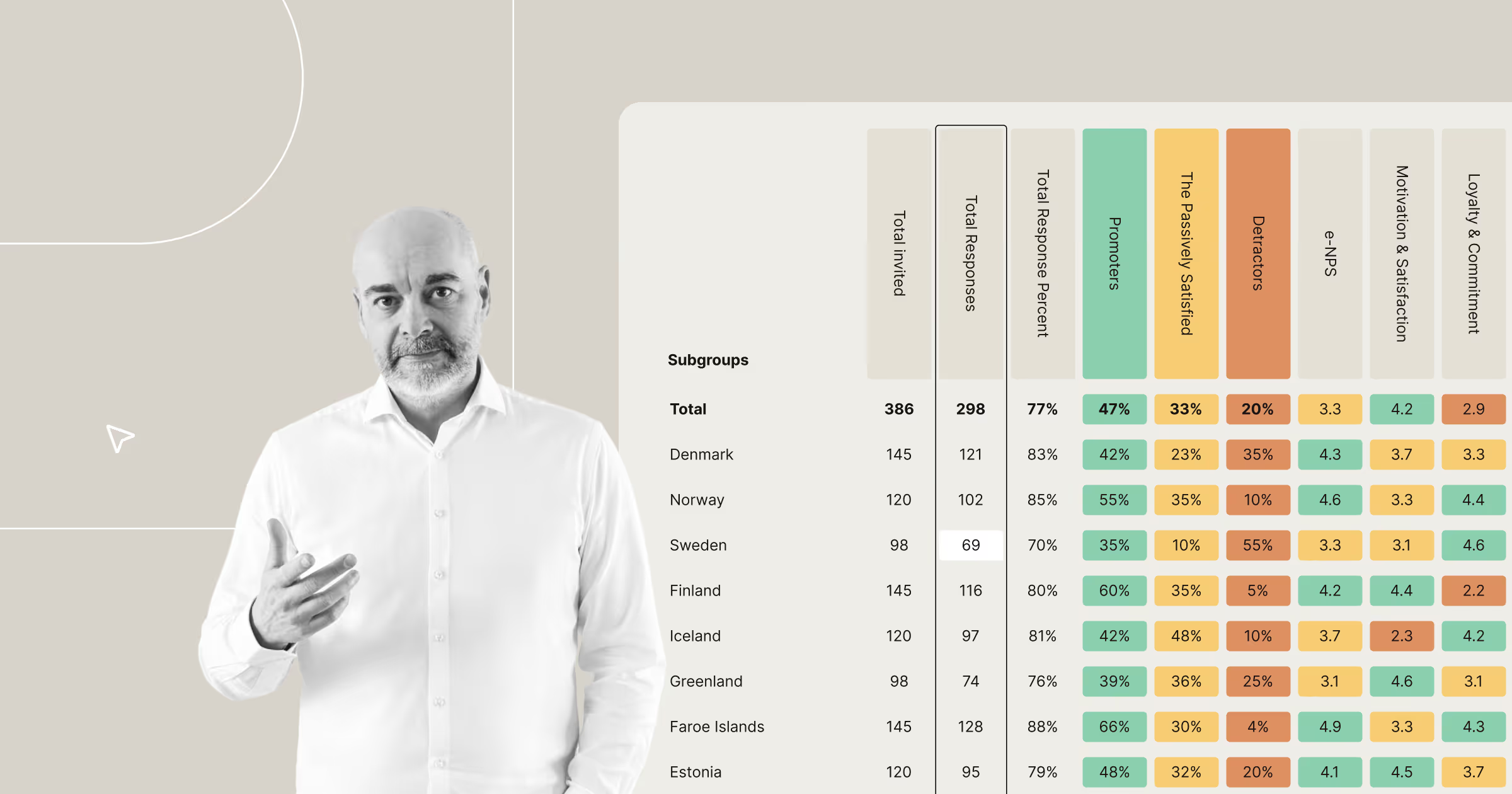
Employee surveys move leadership from gut feeling to data-driven decision-making by providing a solid foundation for understanding what truly drives employee well-being and engagement

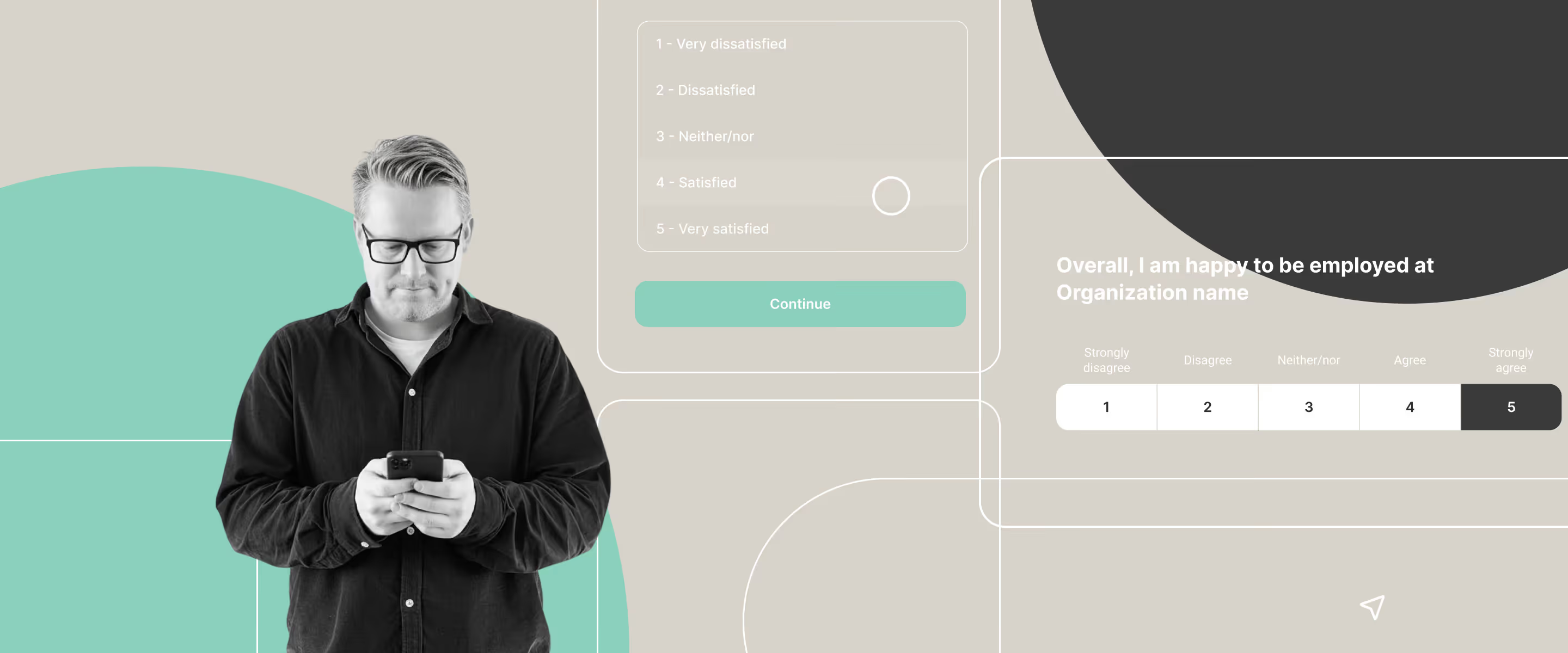

Far too many leadership decisions are still made based on assumptions, isolated cases, or the loudest voice in the room. Employee surveys challenge this and move organizations toward data-driven leadership.
When employee surveys are conducted systematically and with the correct methodology, they provide a robust and comparable data foundation that can be used to:
The key aspect of a data-driven approach is that measurements do not simply describe the situation — they explain relationships. They show why employee well-being and engagement are high or low and exactly where the organization should take action if it wants to create real change.
I have previously written an article about an evidence-based approach to measuring employee well-being, which I recommend you explore.
The traditional employee survey provides depth and overview. But it is not sufficient on its own.
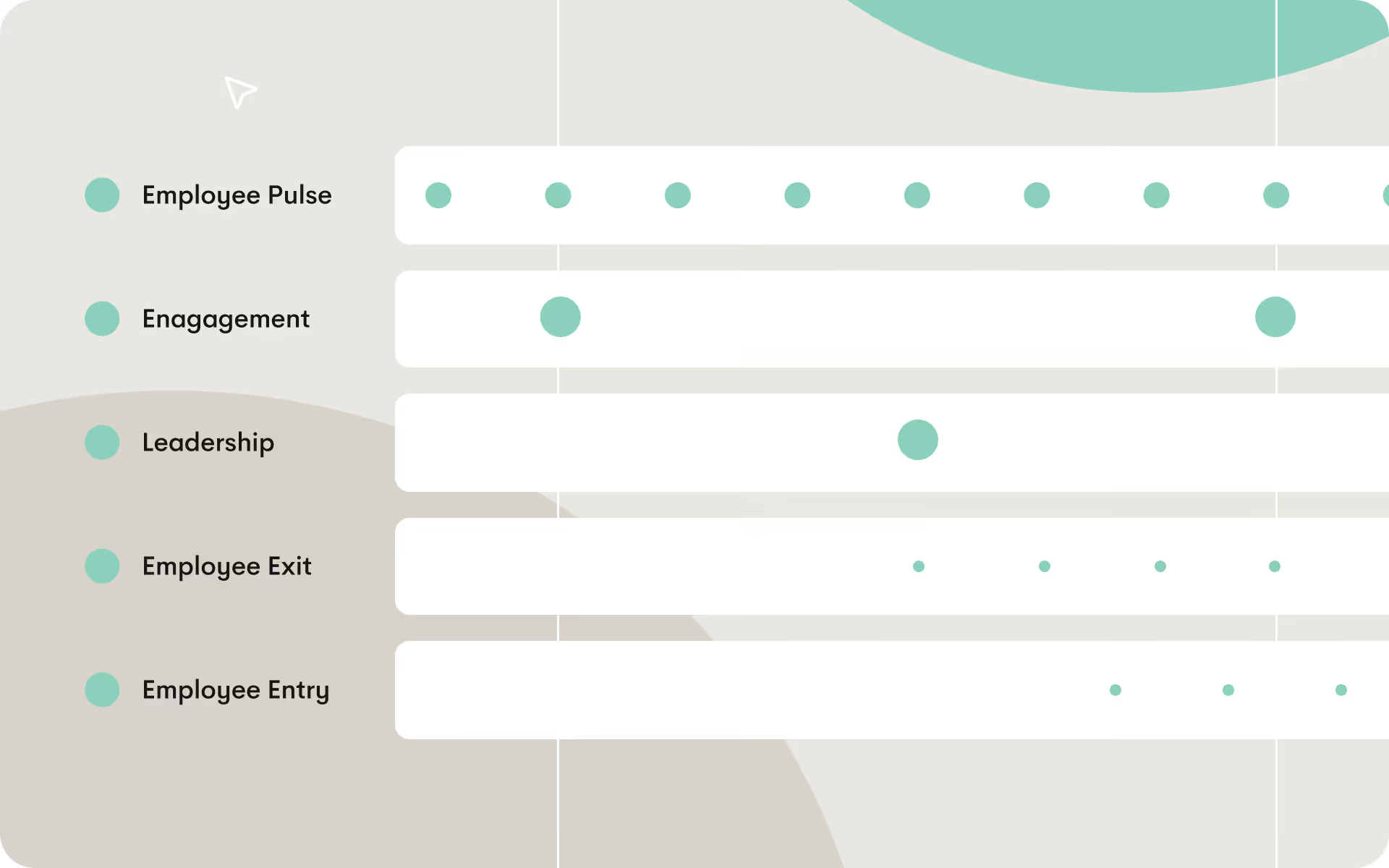
Pulse surveys complement it with timeliness and speed. Short, frequent measurements make it possible to:
Research shows that organizations with frequent feedback loops experience higher levels of involvement and a stronger sense of influence, provided that feedback actually leads to action. The greatest impact occurs when pulse surveys are not used alone, but as a supplement to a more comprehensive employee survey.
Frequent feedback loops can support involvement and the perception of influence within organizations.
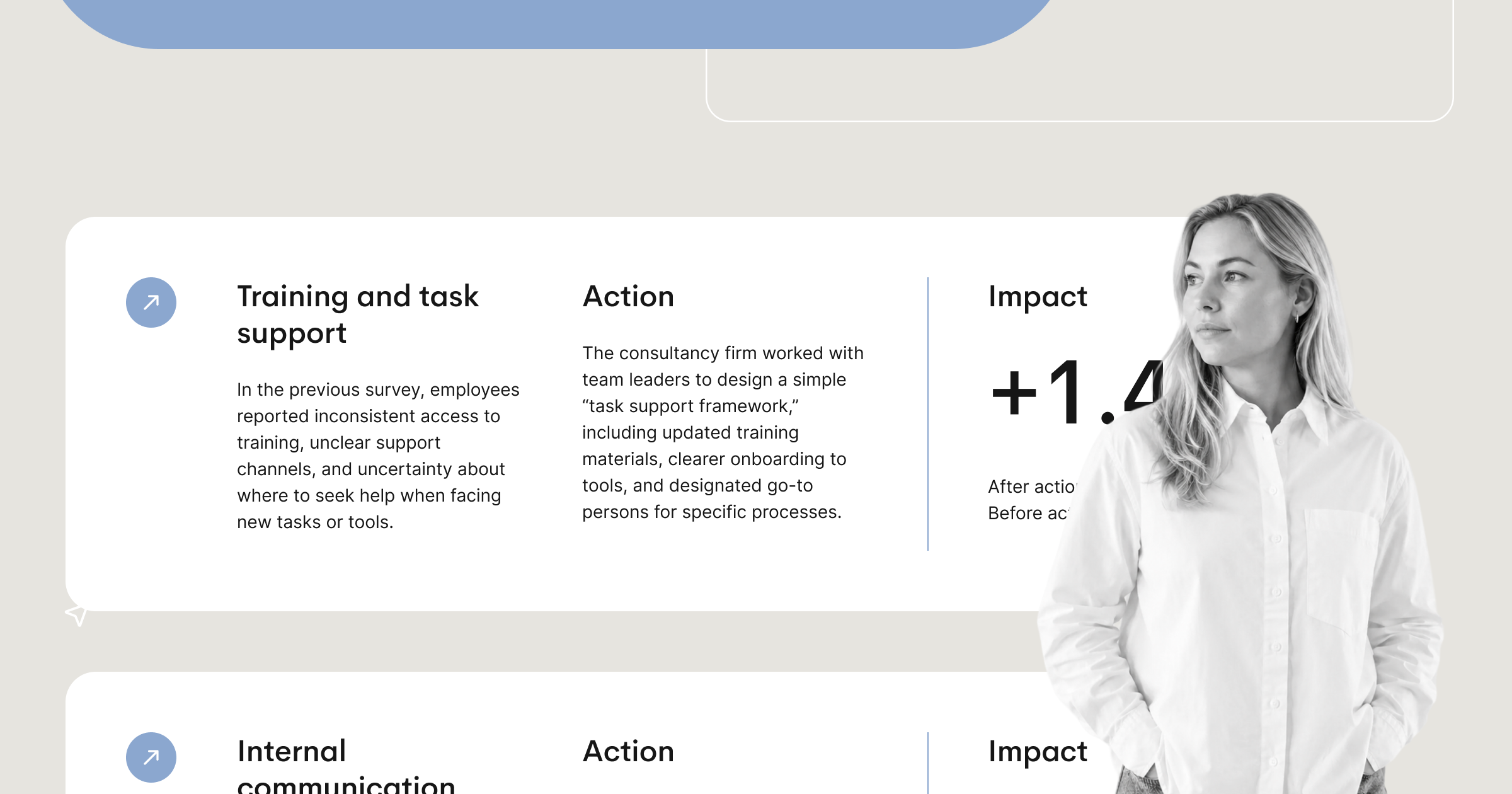
Measuring is easy. Acting consistently is difficult.
Surveys quickly lose their value if:
Data-driven leadership requires the courage to focus. Not 15 areas of action — but 2–3 that truly matter. It also requires analysis that can distinguish between symptoms and root causes.
Enalyzer works data-driven with employee surveys and pulse surveys and draws on both the latest knowledge within work and organizational psychology and many years of experience conducting employee well-being measurements in public and private organizations across the Nordic region.
There are essentially two paths.
For organizations that want maximum impact, a professional solution is often the most robust.
Here, Enalyzer’s consultants handle:
The advantage is clear: higher quality, faster insights, and fewer poor decisions. The organization gains a decision foundation that can be translated directly into action — and that demonstrably improves employee well-being, engagement, and performance.
For organizations that want to own the process themselves, Enalyzer offers Scandinavia’s best survey tool. It makes it possible to run employee and pulse surveys independently without compromising quality.
The tool supports:
Employee surveys and pulse surveys are among the most powerful tools available to modern organizations.
When used in a data-driven way and followed up professionally, they create:
This requires methodology, experience, and the willingness to act. And that is precisely why employee measurement is not just something you conduct — it is something you lead with.
Gallup (2020). Employee Engagement Drives Growth
https://www.gallup.com/workplace/236927/employee-engagement-drives-growth.aspx
Harter, J. K., Schmidt, F. L., & Hayes, T. L. (2002). Business-Unit-Level Relationship Between Employee Satisfaction, Engagement, and Business Outcomes. Journal of Applied Psychology.
Kahn, W. A. (1990). Psychological Conditions of Personal Engagement at Work. Academy of Management Journal.
Nielsen, K., & Randall, R. (2013). Opening the Black Box. European Journal of Work and Organizational Psychology.
An evidence-based approach to employee surveys and measuring employee well-being
https://www.enalyzer.com/da/articles/en-evidensbaseret-tilgang-til-maling-af-medarbejdertrivsel
We'll match you with the right expert.